GTS News Center & Latest Updates
Your Most Professional Enterprise Systems and Software Custom Development Provider!




Against the backdrop of Hong Kong’s financial market steadily advancing toward digitalization and virtual asset compliance, Virtual Asset Trading Platform Development is no longer a topic limited to crypto exchange startups. It has become a strategic priority for brokerages, asset management firms, family offices, and fintech enterprises.From evolving regulatory policies and cross-market trading demands to institutional-grade risk control requirements, enterprises lacking a robust technical architecture and compliance-driven mindset often struggle to remain competitive in an increasingly sophisticated market. This GTS guide addresses the core concerns of enterprise decision-makers by examining trading platform architecture, compliance design, AI-driven risk management, deployment models, and multi-asset integration capabilities—helping organizations build truly sustainable trading infrastructure.I. Why Are Enterprises Accelerating Virtual Asset Platform Strategies?Hong Kong is actively promoting virtual asset regulatory frameworks and market expansion initiatives, attracting institutional capital and international trading platforms. In this environment, enterprises are confronted with three practical questions:1.How can digital asset businesses be expanded while maintaining regulatory compliance?2.How can traditional securities trading be integrated with virtual asset trading?3.How can system implementation and long-term operational risks be reduced?Many organizations have discovered that adopting a simple white-label crypto exchange system is insufficient to support multi-asset integration, internal risk management, and future scalability. As a result, enterprise-grade platform architecture with deep customization capabilities has become a more forward-looking choice.II. Enterprise Architecture: High-Performance Matching and Distributed System DesignA truly competitive virtual asset trading platform is built upon its matching engine and overall system architecture. A high-performance matching engine must support processing capacity of TPS ≥10000, ensuring stable execution and low-latency response even during periods of market volatility. Distributed architecture and microservices design ensure that market data processing, order matching, risk control modules, and clearing and settlement functions remain independent, thereby minimizing single points of failure. For enterprises covering securities, futures, forex, and virtual assets simultaneously, multi-asset integration capability is particularly critical.If your organization is planning a cross-market platform, you may refer to our article “Enterprise-Grade Multi-Asset Trading Solutions: Securities, Forex, Crypto, and Digital Asset Platforms” to gain deeper insights into how matching logic and clearing models across different markets can operate collaboratively. In enterprise platform construction, GTS adopts layered isolation and intelligent optimization algorithms to maintain stability and scalability under high concurrency, providing large institutions with a long-term evolvable technical foundation.III. AI-Driven Risk Management and Strategy OptimizationGiven frequent market volatility, relying solely on traditional rule-based risk controls is no longer sufficient to address complex trading behaviors. By integrating AI modules and machine learning algorithms, platforms can deliver real-time data analysis and predictive capabilities, including:Real-time risk scoring and anomaly detectionAutomated strategy fine-tuning and model optimizationMarket trend forecasting and liquidity analysisThrough data analysis agents and intelligent decision engines, trading platforms can enhance strategy efficiency and market responsiveness while maintaining risk control. Such AI integration not only improves trading intelligence but also strengthens institutional client confidence.IV. Compliance Framework and Regulatory Adaptation in Hong KongWhen conducting Virtual Asset Trading Platform Development in Hong Kong, compliance design is a fundamental prerequisite. Platforms must embed comprehensive KYC, AML, and CTF processes, and support sanctions screening and cross-chain monitoring. Where digital assets and cross-border transactions are involved, the system must also be capable of integrating with regulatory sandboxes and relevant licensing environments.A commonly overlooked issue is that compliance should not be treated as an add-on function. It must be integrated into the core system architecture from the outset. Only in this way can platforms respond efficiently to future regulatory changes without extensive system restructuring. When planning platforms, GTS simultaneously designs regulatory reporting modules and risk control logging mechanisms to ensure full traceability during audits and inspections.V. Beyond Virtual Assets: Integrated Financial System CapabilitiesFor many Hong Kong institutions, virtual assets represent only one segment of a broader business portfolio. A platform with genuine strategic value should simultaneously support securities, options, ETFs, forex, and fund products, operating under a unified account and risk management framework.This reflects the core need of enterprises seeking Financial System Solutions—not merely a standalone trading system, but a comprehensive ecosystem capable of cross-market coordination. Through modular design, enterprises can progressively expand functionality in alignment with business development, without dismantling the existing architecture.VI. Deployment Models: Independent Deployment and SaaS StrategyEnterprises often face trade-offs between cost efficiency and control. Independent deployment (On-Premise) ensures data sovereignty and high customization flexibility, while SaaS models enable faster go-live and lower upfront investment.GTS provides dual-architecture options, allowing enterprises to adopt a one-time licensing model with annual maintenance—potentially reducing long-term operational costs by over 60%—or to choose a SaaS deployment for rapid market validation followed by gradual expansion. Flexible deployment capability enables platforms to align with varying stages of development and capital scale, mitigating transformation risk.VII. Key Considerations When Selecting a Technology PartnerVirtual Asset Platform Implementation involves high technical thresholds and compliance risks, making the selection of an experienced team essential. Enterprises should evaluate whether a partner possesses:Experience in high-frequency trading infrastructureCross-market deployment case studiesLong-term maintenance and version iteration capabilitiesIntegrated R&D and strategic understandingA mature technology partner delivers not only a system but also ongoing architectural optimization throughout market evolution.Conclusion: Planning a Virtual Asset Strategy from a Long-Term PerspectiveAs regulatory clarity increases and institutional capital gradually enters the market, Virtual Asset Trading Platform Development has become a critical component of digital transformation for financial enterprises. The priority is not rapid launch, but the ability to balance compliance, security, performance, and long-term scalability.If your organization is evaluating the establishment or upgrade of trading infrastructure, it is advisable to assess planning from both technical architecture and regulatory perspectives. Engaging in in-depth discussions with a professional team experienced in multi-asset implementation can help clarify potential risks and growth opportunities. GTS will provide practical system blueprint recommendations tailored to your business model and regulatory positioning, supporting stable expansion across Hong Kong and international markets.This article, "Hong Kong Virtual Asset Trading Platform Development: Enterprise-Grade Financial System Solutions for Multi-Market Expansion" was compiled and published by GTS Enterprise Systems and Software Development Service Provider. For reprint permission, please indicate the source and link: https://www.globaltechlimited.com/news/post-id-40/

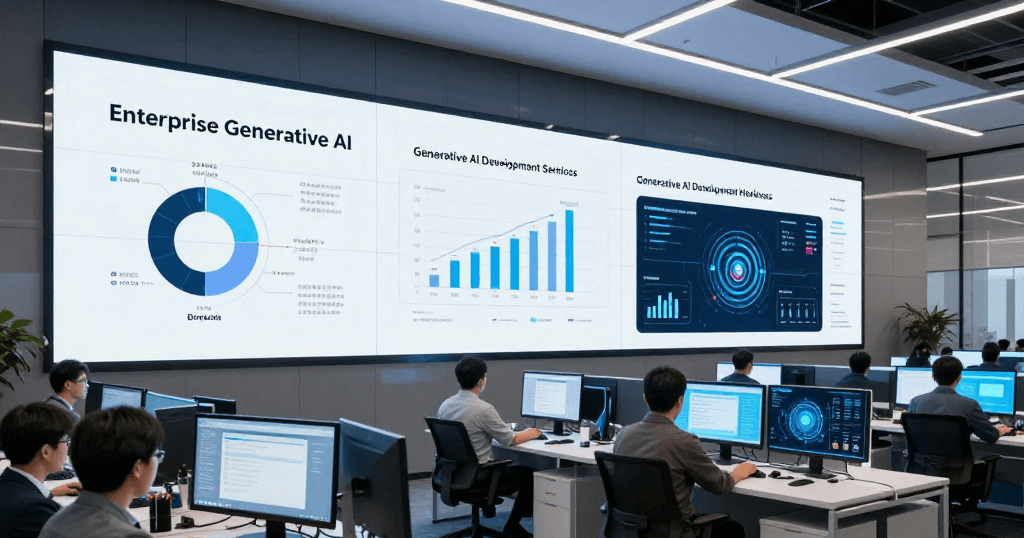
Against the backdrop of accelerating digital economic transformation, an increasing number of large enterprises and public institutions are reassessing their Generative AI Solutions strategy. From intelligent customer service and automated content generation to internal knowledge management and decision-support systems, Generative AI is steadily penetrating core enterprise processes.However, when organizations move from pilot testing to large-scale deployment, a more critical question emerges: Should an enterprise build its own large model platform? And how should decision-makers determine whether a multimodal architecture is necessary?This article examines the issue from the perspective of enterprise technology governance and architectural strategy, breaking down selection logic and practical implementation pathways to help management build long-term AI capabilities under controlled risk.1. From Application Hype to Architectural Thinking: The Real Decision DilemmaIn the early stages of adopting generative AI, many organizations rely on public cloud APIs or general-purpose tools to conduct proof-of-concept (PoC) testing. This approach enables rapid deployment and works well for isolated use cases such as translation or content drafting.However, once applications expand to cross-department collaboration, sensitive data processing, and internal system integration, several challenges surface:Can data be securely stored within a private environment?Can model responses accurately integrate proprietary knowledge bases?Can workflows be customized to departmental requirements?Does the system offer sustainable scalability?These concerns represent the turning point from being a tool user to becoming a platform builder. Long-term value-driven Generative AI Solutions are typically built on controllable, scalable, and governance-ready enterprise architecture.2. What Defines an Enterprise AI Architecture? Core Capability BreakdownEnterprise-level deployment is not merely about API integration—it requires a complete technical infrastructure. A mature AI large model platform should include the following components:1.Foundation Model Layer (LLM & Multi-Model Strategy): This includes Large Language Models (LLMs), fine-tuning mechanisms, and multi-model orchestration strategies to ensure accuracy and stability across different scenarios.2.Knowledge Base & RAG Architecture: Through Retrieval-Augmented Generation (RAG), enterprises integrate internal documentation, policy materials, and historical cases to enhance contextual accuracy. This also involves enterprise knowledge base integration and strong data governance capability.3.Agent & Workflow Layer: Enterprise-grade AI Agents can integrate with CRM, ERP, or internal management systems to enable workflow automation, going beyond single-turn conversational interactions.4.Security & Compliance Mechanisms: This includes on-premise AI deployment, access control management, and data compliance frameworks to meet Hong Kong and cross-border regulatory standards.3. Is Multimodal Necessary? Three Criteria to Evaluate TimingIn recent years, AIGC multimodal large model solutions have gained significant market attention. Multimodal AI integrates text, image, and voice inputs to enhance customer engagement and analytical capabilities. But does every enterprise need it?GTS recommends evaluating based on three criteria:Are your data types diverse? If your operations involve image approval, voice records, or visual analysis, multimodal architecture offers advantages.Do business processes require cross-media handling? For example, insurance claims, financial approvals, or retail customer service.Is search accuracy a core competitive factor? Combining proprietary AI search engines with RAG systems can significantly improve content matching precision.If these needs are evident, multimodal platforms will become part of long-term competitiveness. If business operations are primarily text-based, a phased upgrade approach may be more appropriate.4. From Generic Tools to Platform Upgrade: A Three-Stage Enterprise PathIn practical implementation, most enterprises move through three stages:Stage 1 – Experimentation & Validation: Use public APIs or SaaS tools for isolated scenario testing.Stage 2 – Process Integration: Integrate with internal systems, build knowledge bases, and deploy foundational AI Agents.Stage 3 – Platformization: Establish a dedicated large model platform supporting multi-model collaboration, private deployment, and continuous optimization.As discussed in our article “Enterprise Generative AI Solutions: From General-Purpose Tools to Deeply Customized Workflows”, standardized tools cannot sustain long-term strategic development. Ultimately, enterprises require customized architecture to improve control and efficiency.5. Platform Selection: Five Key Evaluation MetricsWhen choosing an enterprise AI platform or implementation partner, consider:Scalability & Model Flexibility: Does it support multi-model integration and dynamic upgrades?Data Security & Compliance: Does it enable private deployment and hierarchical access control?Knowledge Base Update Efficiency: Can the RAG system synchronize internal data in real time?Agent Collaboration Capability: Does it support cross-system workflow automation design?Continuous Optimization & Monitoring: Does it provide bias correction, model monitoring, and performance analytics?These criteria help enterprises avoid costly migration risks caused by poor platform selection.6. Conclusion: Platformization Is the Long-Term Direction of Generative AIFuture enterprise competition will no longer revolve around isolated AI applications, but around comprehensive AI architectural capability. Mature Generative AI Solutions must combine platform governance, model lifecycle management, and multimodal integration to continuously create value in complex market environments.As a local B2B software system development provider, GTS specializes in enterprise AI customization, including proprietary AI Agents, RAG knowledge architectures, multi-model integration, and private deployment strategies. We help large organizations build sustainable AI core systems. Rather than chasing short-term tool advantages, enterprises should invest in their own digital infrastructure.If you are evaluating an AI architecture upgrade or assessing enterprise deployment feasibility, we invite you to schedule a technical consultation. Our expert team will provide architecture recommendations and an implementation roadmap tailored to your industry and compliance requirements—helping you advance AI transformation with confidence and risk control.This article, "How to Choose an Enterprise AI Large Model Platform? A Deployment Guide to Generative AI Solutions and Multimodal Architecture" was compiled and published by GTS Enterprise Systems and Software Development Service Provider. For reprint permission, please indicate the source and link: https://www.globaltechlimited.com/news/post-id-39/

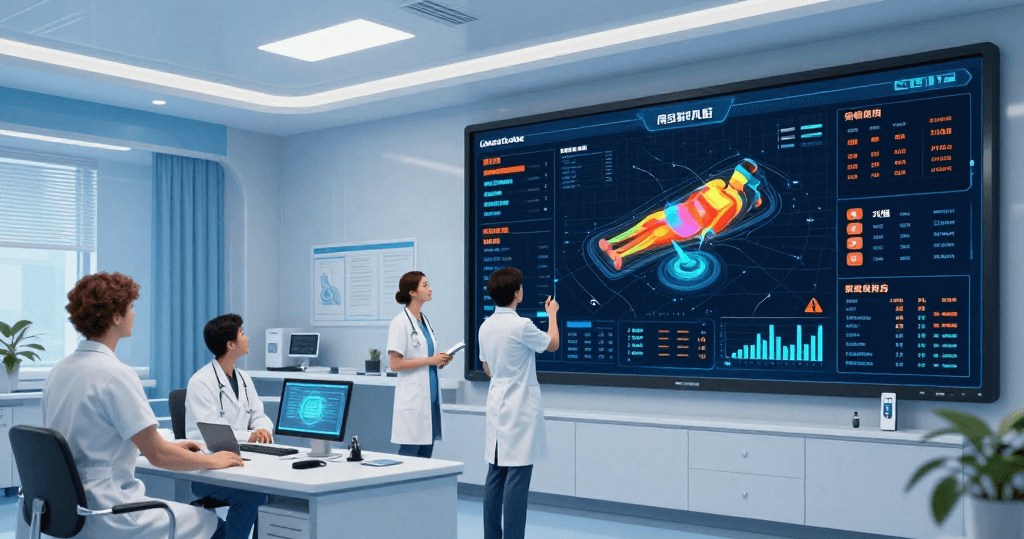
Under the continued expansion and refined management of Hong Kong’s private healthcare system, hospitals, specialty centers, and chain clinics are simultaneously facing multiple pressures, including operational efficiency, data compliance, cross-department collaboration, and patient experience optimization. When systems are fragmented, data silos are severe, and manual processes remain heavily relied upon, management often struggles to gain real-time visibility into key operational indicators—let alone implement data-driven decision-making.In this context, the HIS Medical Information Management Platform is no longer merely a supporting tool, but the core infrastructure that enables integrated clinical and operational management. This article will comprehensively analyze its strategic value within Hong Kong’s healthcare environment from four perspectives: architectural definition, clinical application, intelligent upgrades, and practical implementation.1、What Is a HIS Medical Information Management Platform?A HIS Medical Information Management Platform (Hospital Information System) is the core system that integrates all critical business processes and data flows within a hospital. It typically includes modules such as patient appointment and registration, electronic medical records (EMR), clinical treatment documentation, pharmacy and inventory management, laboratory and imaging integration (LIS/PACS), bed and resource allocation, as well as financial and reporting analytics.Unlike single-function systems, the key value of a HIS platform lies in integration. Through a unified data architecture and permission management mechanism, it enables cross-department information synchronization, reduces duplicate data entry and error risks, and provides management with real-time operational data visibility.For a deeper understanding of the fundamental functions and application scenarios of HMS and HIS systems, you may refer to our dedicated article: “What is an HMS/HIS Healthcare Management System? Basic Functions and Application Scenarios.” This article helps establish a comprehensive system understanding framework.2、How HIS Platforms Support Clinical Medical ManagementFor healthcare institutions, the true value of a system lies in its ability to support clinical medical management. When clinical workflows span outpatient services, inpatient care, surgical procedures, and cross-specialty consultations, the absence of a unified platform can cause collaboration costs to multiply as the organization scales.HIS platforms enhance clinical management efficiency through the following capabilities:Clinical pathway standardization: Supporting treatment workflow configuration and embedding clinical guidelines to ensure consistency in medical quality.Real-time medical record sharing: Allowing physicians across specialties to access complete patient histories simultaneously, reducing redundant examinations.Role-based access control: Assigning system permissions based on responsibilities, ensuring compliance with Hong Kong’s Personal Data (Privacy) Ordinance (PDPO).Real-time decision support: Providing data prompts and alert mechanisms to help medical staff identify risks.When clinical information flows and operational management processes are integrated within a single platform, healthcare institutions can effectively shorten patient waiting times, improve bed turnover rates, and reduce manual error rates. This represents the core objective of digital transformation in clinical medical management.3、From Information Integration to Smart Healthcare SolutionsAs healthcare data volumes continue to grow, simple information integration is no longer sufficient to sustain long-term competitiveness. By incorporating AI and advanced data analytics capabilities, HIS platforms can further evolve into comprehensive smart healthcare solutions.For example:AI-assisted diagnosis and risk prediction: Conducting pattern analysis based on historical clinical data.Intelligent scheduling and resource optimization: Automatically adjusting staffing configurations based on real patient flow forecasts.Real-time dashboards: Displaying key KPIs such as average length of stay and inventory turnover rates.Cross-system interoperability: Supporting integration with the Hospital Authority (HA) and other external healthcare platforms.Through these capabilities, healthcare institutions can not only improve operational efficiency but also establish a data-driven competitive advantage. For private hospitals and medical groups, smart healthcare solutions have gradually become a critical pillar of operational upgrades.4、Practical Considerations for Implementing HIS Platforms in Hong KongImplementing a HIS platform is not a simple procurement decision; it involves long-term IT architecture planning and operational strategy restructuring. Management teams typically evaluate the following factors:1.System integration capability: Whether seamless integration with existing HIMS, PACS, LIS, and financial systems is supported.2.Data security and compliance: Whether the system complies with local privacy regulations and data access standards.3.Scalability and modular design: Whether it supports future expansion to new campuses or specialties.4.Localized implementation experience: Whether the vendor is familiar with Hong Kong medical workflows and HA integration requirements.Additionally, system deployment should adopt a phased implementation strategy combined with user training and workflow optimization to ensure a smooth transition process.5、The Long-Term Value of HIS Platforms: From Clinical Management to Operational CompetitivenessAs the healthcare market enters an era of refined management, the value of information systems extends beyond manpower cost reduction to accelerating decision-making speed and mitigating long-term operational risks. HIS platforms can bring:Higher bed utilization rates and patient flow efficiencyMore precise pharmacy and consumables inventory managementReal-time data support for executive strategic planningA sustainably evolving IT infrastructureBy integrating clinical medical management and smart healthcare solutions within a unified core platform, healthcare institutions can build a scalable digital foundation that supports future business growth and technological upgrades.The value of a HIS Medical Information Management Platform does not lie solely in the system itself, but in how it becomes the core engine driving continuous evolution and improving clinical medical management efficiency. Amid the ongoing transformation of Hong Kong’s healthcare environment, the HIS Medical Information Management Platform has become a key cornerstone supporting clinical operations, business management, and strategic decision-making. Choosing the right system architecture and implementation partner will directly influence development pace and competitive advantage in the coming years.If your organization is currently evaluating system restructuring, platform upgrades, or smart healthcare roadmap planning, please contact us via the page form. The GTS professional consulting team will provide customized assessment recommendations—from requirements analysis and architectural design to implementation and integration—helping you establish a long-term information infrastructure aligned with Hong Kong medical practices and jointly plan the next phase of digital healthcare advancement.This article, "What Is a HIS Medical Information Management Platform? How It Improves Clinical Medical Management Efficiency" was compiled and published by GTS Enterprise Systems and Software Development Service Provider. For reprint permission, please indicate the source and link: https://www.globaltechlimited.com/news/post-id-38/

In a rapidly evolving financial market environment, Enterprise-Grade Trading System Development has become a core foundation for brokers, asset management firms, and trading platforms to implement their strategic objectives. Choosing the right development partner not only affects development efficiency, but also directly impacts trading stability, risk management effectiveness, and regulatory compliance.As a professional with long-term experience in trading system R&D and real-world industry deployment, GTS analyzes the key considerations enterprises should focus on when selecting a trading system development partner from five dimensions: technical capabilities, compliance and security, long-term operations and maintenance, delivery track record, and contractual arrangements.I. Evaluating Technical Capabilities in Trading System DevelopmentFor any enterprise, system performance and stability are the most direct indicators of competitiveness. When assessing a development partner’s technical capabilities, enterprises may consider the following aspects:1. High-Performance Matching Engines and Market Data PipelinesThe core of a trading system lies in its matching engine, which determines order matching speed and accuracy. Whether a partner can design millisecond- or even microsecond-level matching engines directly affects strategy execution efficiency. At the same time, non-blocking market data pipelines and event-driven architectures ensure synchronization between strategy computation and market data, reducing discrepancies between simulation and live trading.2. Modular and Scalable ArchitectureA sound system architecture should support modular design, separating market data, matching, risk control, clearing, and account management into independent layers. This not only facilitates future feature expansion but also reduces systemic risk caused by changes to individual modules. Enterprises should confirm whether the partner has experience integrating multi-asset trading (spot, options, ETFs, virtual assets) as well as horizontal and vertical scalability.3. Strategy Execution and Testing CapabilitiesBeyond architecture, whether a partner supports strategy simulation, stress testing, and live-market validation is a critical factor. This directly determines the reliability of trading strategies and the protection of funds under highly volatile market conditions.II. Evaluating Compliance and Security CapabilitiesTrading system development is not purely a technical exercise; compliance and security are indispensable dimensions. When evaluating partners, enterprises should focus on:Integrated compliance workflows: The partner should be able to embed KYC, AML, and CTF processes into the system, while integrating sanctions list screening and cross-market risk monitoring to ensure regulatory compliance.Data security and access control: Given the sensitivity of financial data, systems must support layered permission management, encrypted transmission, comprehensive logging, and anomaly alerts.Security testing and risk alerts: The partner should be capable of conducting penetration testing, stress testing, and live risk simulations to ensure real-time protection against operational risks.Based on my product and R&D experience, partners that tightly integrate Trading System Development with compliance and security provide significant long-term value for enterprise operations and regulatory inspections.III. Long-Term Operations and Lifecycle SupportEnterprise-grade trading systems typically have lifecycles exceeding five years, making maintenance and iteration capabilities equally critical. Key evaluation points include:Version iteration and hot update capabilities: The ability to update strategies or modules rapidly without interrupting core trading is a key indicator of operational maturity.Continuous monitoring and performance optimization: Whether the partner provides full-chain monitoring, TPS analysis, and market latency diagnostics, along with optimization solutions under high load.Technical support and training: Ongoing technical support, documentation, and internal training ensure enterprise teams can fully understand system architecture and operations, reducing dependency risks.Long-term operations capability directly affects strategy iteration speed and business expansion potential, making it a core evaluation criterion.IV. Delivery Track Record and Industry ExperienceSuccessful case studies and industry experience help enterprises quickly assess a partner’s delivery capabilities:Multi-asset trading platform experience: Whether the partner has delivered systems covering securities, options, ETFs, FX, and virtual assets.Cross-market and cross-regulatory deployment experience: For platforms operating across Hong Kong, US, and international markets, partners must understand different regulatory requirements and settlement processes.Proven delivery results and client references: Case demonstrations and client feedback provide direct insight into delivery performance under high load, multi-strategy, and stringent risk control environments.I recommend that enterprises prioritize partners with real-world high-frequency trading experience, concurrent multi-strategy operations, and cross-market integration expertise. For example, the GTS team supports enterprises seeking rapid deployment and strategy iteration across Hong Kong, US, and international markets by providing comprehensive Enterprise-Level Solution Services, covering market data processing, matching engines, risk control, clearing, and account management—all tailored to enterprise strategies.V. Contractual Frameworks and Intellectual Property ProtectionTrading system development involves advanced technology and sensitive strategies. Sound contractual and IP arrangements are essential to ensure long-term cooperation security and mitigate legal and operational risks:Clear scope and responsibilities: Development timelines, delivery standards, maintenance responsibilities, and risk allocation should be clearly defined.Intellectual property protection: Enterprises must ensure clear ownership, usage rights, and modification rights for systems and core modules to support future expansion.Confidentiality and information security clauses: Given the sensitivity of trading strategies and client data, strict confidentiality provisions are essential.Conclusion: Choosing the Right Partner Is the Best Way to Reduce Long-Term RiskTruly reliable partnerships are built on deep understanding of business objectives, shared responsibility for system risk, and sustained investment in technological evolution. Through in-depth dialogue with teams that possess real-market experience and strong R&D capabilities, enterprises can gain clearer visibility into their system status and potential risks while preserving flexibility for future expansion and strategic adjustments.The success of Enterprise-Grade Trading System Development depends not only on technical expertise, but also on compliance, security, long-term operations, delivery experience, and contractual safeguards. Choosing a partner with comprehensive capabilities—such as GTS—enables enterprises to maintain fund security, strategic flexibility, and stable risk control in high-frequency, multi-market environments.This article, "How Should Enterprises Evaluate Trading System Development Partners? From Technical Capabilities to Long-Term Operations" was compiled and published by GTS Enterprise Systems and Software Development Service Provider. For reprint permission, please indicate the source and link: https://www.globaltechlimited.com/news/post-id-37/
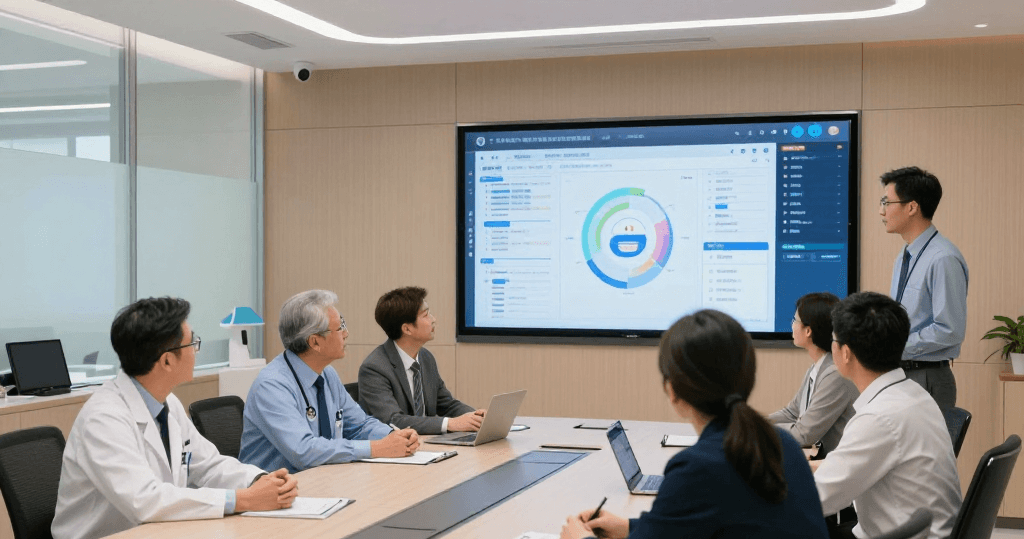
Within Hong Kong’s private healthcare ecosystem, hospitals, specialty centers, and chain clinics are simultaneously facing multiple pressures, including expanding operational scale, rising regulatory requirements, and increasing workforce constraints. For senior leadership, whether to invest in custom healthcare system development is no longer merely a technical consideration, but a strategic decision that directly impacts cost structure, decision-making efficiency, and long-term operational risk.When evaluating system upgrades, many executives are not asking “Can it be done?” but rather “Is it worth doing?” This article provides a comprehensive analysis of the true investment and value of customized healthcare systems from three perspectives: cost structure, hidden risks, and actual returns.I. What Factors Determine the Cost of a Customized Healthcare System?1. Functional Scope and Module Depth: Not “Whether It Exists,” but “How Deeply It Is Used”In healthcare system projects, feature lists are often the first step in cost estimation. In practice, however, the real cost differentiation lies not in the number of modules, but in their depth.Common modules such as EMR, online appointment booking, pharmacy management, medical imaging, bed management, and AI-driven decision support may appear to be standard offerings. Yet in real-world usage, whether these modules support multi-specialty workflows, cross-role permissions, clinical pathway configuration, and real-time decision prompts has a direct impact on system design complexity and development effort. The difference between “functionally available” and “truly embedded into clinical and operational workflows” often represents two entirely different cost levels.2. System Integration and Data Interoperability Costs: The Most Commonly Underestimated FactorFor most healthcare institutions in Hong Kong, systems are not built from scratch. Instead, they must integrate with existing HIS, HIMS, PACS, LIS, and even third-party financial or workforce scheduling platforms. Each integration point involves data structure alignment, workflow synchronization, and error-handling mechanisms.When further data exchange with the Hospital Authority (HA) or external platforms is required, the demands on security and real-time performance increase significantly. This is why, in hospital system development practice, experienced teams typically start by mapping critical workflows and then design the integration architecture accordingly, rather than simply stacking interfaces.3. Compliance, Privacy, and Security Design: Costs That Cannot Be Fixed LaterIn Hong Kong, PDPO requirements for patient data privacy mean that healthcare systems must be built with comprehensive access controls, role-based permissions, and audit logging from the outset. If these elements are overlooked in early design phases, retrofitting them later often requires major architectural changes—at a cost far higher than getting it right the first time.II. Why Do Off-the-Shelf Systems Appear Cheaper but Cost More in the Long Run?Many healthcare organizations initially choose off-the-shelf systems due to budget constraints or faster deployment timelines. However, licensing fees have never equaled total cost of ownership (TCO).Common hidden costs include secondary customization, workflow compromises, and extensive manual workarounds. When systems cannot align with real operational needs, frontline staff resort to spreadsheets, manual reconciliation, or repeated data entry to “patch” system gaps—ultimately slowing down overall efficiency.It is often only after operational scale increases that organizations fully recognize the cost of limited system flexibility and integration constraints. We have explored the decision logic between customized and off-the-shelf systems in depth through real healthcare case studies in a previous article: “Custom Hospital Information Systems vs Off-the-Shelf Solutions: How Should Hospitals Choose?”.III. How Should Healthcare Organizations Evaluate the True ROI of a Customized Healthcare System?1. Quantifiable Operational Efficiency Gains: Can Leadership Actually See Them?Meaningful ROI comes from measurable improvements in operational metrics—such as higher bed turnover rates, more accurate staff scheduling, and reduced waste in pharmacy and medical supply inventory. When systems can reflect these metrics in real time, IT investments become management decision tools rather than merely back-office support.2. Enhanced Clinical and Management Decision-MakingThrough real-time dashboards and predictive KPIs, leadership teams can move beyond retrospective reviews to proactively identify risks and bottlenecks. “Data that is visible and actionable” has become a key reason why healthcare system development services are receiving growing attention.3. Long-Term Evolvability of IT ArchitectureAnother critical return of customization lies in future scalability. Whether expanding to new campuses, adding new specialties, or continuously layering AI and smart healthcare capabilities, a flexible system architecture keeps future investments under control.IV. Is Customized Development Suitable for Every Healthcare Organization?Not all organizations require the same level of customization. Generally, private hospitals and healthcare groups benefit most due to complex workflows and clear economies of scale. Specialty centers and chain clinics, on the other hand, must assess customization needs based on their growth stage and integration requirements.The key factor is not organizational size, but whether the system needs to support differentiated operational models—an essential question leadership must clarify when evaluating customized healthcare management systems.Key Criteria for Hospital IT Leaders When Selecting a Development Partner:For CIOs and IT teams, partner selection goes far beyond technical capability alone. Does the partner truly understand clinical and operational workflows? Do they have proven experience in multi-system integration? And can they provide a long-term evolution roadmap rather than a one-time delivery? These factors are often decisive for project success.V. From IT Cost Control to Sustainable Operational CompetitivenessThe core value of custom healthcare system development lies not merely in “cost savings,” but in faster decision-making, system sustainability, and long-term operational risk control—making it an investment in future competitiveness.When existing healthcare systems can no longer support operational scale, cross-system integration, or future smart healthcare initiatives, the issue is not simply replacing software, but re-evaluating the entire information architecture. At this stage, the GTS healthcare team can assist organizations in assessing the real costs, risks, and returns of system restructuring or custom healthcare system development within the context of Hong Kong’s healthcare environment—ensuring every IT investment delivers tangible operational value.This article, "Custom Healthcare System Development Costs and Returns: A Comprehensive Analysis for Hospital IT Leaders" was compiled and published by GTS Enterprise Systems and Software Development Service Provider. For reprint permission, please indicate the source and link: https://www.globaltechlimited.com/news/post-id-36/

As a professional long focused on multi-asset trading solutions, I deeply understand the pain points enterprises face during platform design and deployment: how to ensure trading efficiency in high-frequency environments, unify fund and account management, and maintain robust risk control and compliance despite market complexity. In this article, I will provide a detailed analysis of practical points for enterprise-grade multi-asset trading solutions—from architecture design, fund clearing, and strategy execution to risk control and compliance integration—to help businesses stay competitive in the Hong Kong, US, and global markets.1. Multi-Asset Trading Systems: Why They Are the Next Evolutionary CoreIn today's financial markets, enterprises often need to manage trading strategies across different asset classes simultaneously. Traditional single-asset trading systems can no longer support complex cross-market and multi-product requirements. The core value of a multi-asset trading platform lies in unifying trade flows, strategy execution, and risk control rules, allowing firms to operate securities, forex, options, ETFs, cryptocurrencies, and other digital assets concurrently.From my experience in Hong Kong, Macau, and overseas markets, enterprises considering multi-asset trading systems are most concerned with: ensuring consistent matching efficiency across assets despite market volatility, rapidly responding to strategy iterations, and maintaining fund security and compliance transparency under integrated multi-asset operations.2. How System Architecture Supports Asset DiversityA multi-asset trading platform must balance flexibility and high performance to meet the needs of diverse asset classes. I summarize the key aspects as follows for clarity:Modular DesignEach asset class corresponds to core modules, including market data engines, matching engines, risk control modules, fund clearing, and account management. This design allows enterprises to quickly integrate new assets or markets while keeping core trading processes stable, avoiding disruptions to existing strategies.Event-Driven and Non-Blocking Data PipelinesHigh-frequency trading requires the ability to process large volumes of market data and order flows rapidly. Event-driven, non-blocking architectures ensure strategy execution aligns with real-time market conditions, reducing deviations between simulation and live trading, thus enhancing efficiency.Importance of Unified Matching EnginesA unified matching engine processes trading instructions across different assets, maintaining market depth and price transparency. In my experience, this is the key to stable multi-asset trading platform operations, particularly for Hong Kong-US equities, derivatives, and digital assets.3. Unified Account Management and Netting MechanismFund management is one of the most complex aspects of a multi-asset trading platform. Key points include:Unified Account with Sub-AccountsSupports multi-asset trading while increasing flexibility in risk control. Different strategies and asset classes can be isolated within sub-accounts, reducing the impact of individual risks on the overall system.Hot and Cold Wallet LayeringFor cash and digital asset trading, hot wallets handle daily transactions, while cold wallets act as a security buffer. Combined with multi-signature strategies and anomaly monitoring, this significantly reduces internal and external risks and protects funds.Netting MechanismParticularly important for cross-asset and cross-market trades, netting reduces fund occupancy, lowers clearing costs, and improves capital efficiency. For enterprises running multiple strategies and markets simultaneously, it is a core method to enhance trading performance and reduce operational risk.4. Risk Control Middleware and Concurrent Multi-Strategy ManagementThe success of multi-asset trading platforms depends heavily on robust risk control middleware. It must monitor asset positions, fund flows, and strategy behaviors in real time, supporting dynamic stop-loss, position limits, and risk alerts for concurrent strategy execution. This design allows enterprises to maintain fund security and trading stability even during volatile markets or strategy updates.In practice, strategy execution modules are tightly coupled with the risk control middleware so that each trading decision aligns with risk rules. For digital asset strategies, attention to high volatility risks is critical. I also recommend enterprises refer to “Building a Virtual Asset Trading Platform: How Enterprises Balance Technology and Compliance” for deeper insights on balancing technical execution and compliance.5. Unified Compliance and Audit TrailIn Hong Kong and cross-border markets, compliance requirements are increasingly stringent. Multi-asset platforms must embed full compliance processes, supporting KYC, AML, and CTF workflows, while integrating sanction list matching and cross-market risk monitoring. Trading and risk operations must be fully logged to generate audit reports that meet regulatory standards.Unified compliance and audit trails enhance transparency and allow enterprises to quickly trace issues during regulatory inspections or internal audits. Layered and modular designs ensure compliance continuity even during strategy updates or asset expansion, further improving system controllability.6. System Deployment and Business Value RealizationFrom a practical perspective, the core of developing a multi-asset trading platform lies in operability and performance optimization. GTS’s project experience in Hong Kong and overseas shows that high-performance matching engines can handle tens of millions of trading instructions daily, market data pipelines process tens of thousands of ticks per second, and multi-asset integration spans spot, forex, derivatives, and digital assets. Modular architectures and full-chain monitoring ensure each core module can be independently upgraded and debugged, allowing trading strategies to iterate without interrupting core operations.For enterprises seeking to enhance trading efficiency and reduce architecture risk across multiple markets and strategies, GTS offers a comprehensive multi-asset trading solutions service. From market data handling, matching engines, risk control, clearing, to account management, all can be customized to enterprise strategies, supporting future business expansion and market innovation. Contact GTS for exclusive technical consultation and system assessment to build a secure, stable, and sustainable trading platform.This article, "Enterprise-Grade Multi-Asset Trading Solutions: Securities, Forex, Crypto, and Digital Asset Platforms" was compiled and published by GTS Enterprise Systems and Software Development Service Provider. For reprint permission, please indicate the source and link: https://www.globaltechlimited.com/news/post-id-35/

As digital transformation accelerates, Enterprise Generative AI Development has become a key strategy for enhancing operational efficiency, optimizing decision-making processes, and driving product innovation. However, with numerous AI service providers in global and Hong Kong markets, enterprise decision-makers face the critical challenge of accurately selecting solutions that meet their specific needs. This article analyzes the entire process—from market trends, service models, and technical indicators to post-deployment monitoring—and provides a practical procurement guide to assist enterprises in making informed decisions.1. Global and Hong Kong Market TrendsGenerative AI technologies have been rapidly evolving in recent years, expanding from natural language processing and content generation to automated translation and intelligent customer service. Market research indicates that global enterprise investment in generative AI grows by over 30% annually, with finance, retail, and technology sectors showing the highest demand for automated decision-making and content generation.In the Hong Kong market, the demand for localized and industry-specific AI solutions has increased significantly. Over 60% of enterprises plan to deploy generative AI technologies within the next 12 months, favoring professional models capable of handling both Traditional Chinese and mixed Chinese-English contexts. Popular technologies include large language models (LLM), GPT5, and multi-modal data integration techniques, which significantly improve content generation quality and business process automation.Market trends also indicate that enterprises prefer generative AI services with measurable ROI and scalability, while giving high importance to the vendor’s local deployment capability and industry experience. This aligns with our previous article, "Why Enterprises Need Custom AI Solutions Instead of Off-the-Shelf Tools", which emphasized that standard tools are convenient but cannot fully satisfy specific business processes or local language requirements.2. Enterprise-Level Services vs Consulting vs PlatformsEnterprises typically face three models when procuring generative AI development services:1.Enterprise-Level Services (Full-Service Development): Vendors provide end-to-end model development, deployment, and operational optimization, suitable for enterprises with clear business pain points seeking high-precision implementation.2.AI Consulting (Consulting & Advisory): Focused on strategic planning and technical architecture, suitable for enterprises that need a clear technical blueprint or plan to partially build internally.3.AI Platforms (SaaS/Platform): Offer general-purpose AI tools and APIs for rapid deployment, but their adaptability to specific business processes is limited.When choosing a model, enterprises should consider business complexity, internal technical capacity, implementation speed, and cost control. For enterprises pursuing Enterprise Custom AI Development, the end-to-end enterprise-level service model better ensures model accuracy and process automation outcomes.3. How to Write RFP / Tender DocumentsA complete RFP (Request for Proposal) or tender document is critical to ensure the vendor delivers according to requirements. Key points include:Clearly define business needs and objectives: Identify core issues such as automated translation, intelligent customer service, or content generation.Technical requirements: Specify acceptable generative AI models (e.g., GPT5, LLM), data integration methods, and multi-modal support.Performance metrics: Define accuracy, response time, and scalability for subsequent evaluation.Delivery and support: Specify project milestones, delivery timelines, and post-deployment support to ensure vendor compliance.A well-prepared RFP enables fair comparison among vendors and promotes efficient implementation of generative AI development services.4. Key technical indicators and evaluation system for generative AIThe core indicators for evaluating generative AI development services include:Measurable KPIs: Translation accuracy, naturalness of generated content, model response speed, system stability.Delivery indicators: Delivery timelines, model version update frequency, and knowledge base integration completion.Industry fit: Vendor’s track record and customization ability in specific industries, especially real-world applications in Hong Kong enterprises.Establishing a clear evaluation system helps enterprises select the most suitable partners and avoid failures due to standardized tools or non-localized models.5. Quality monitoring and optimization after successful AI project launchContinuous monitoring and optimization are critical after deployment:Performance monitoring: Track output accuracy, content naturalness, and business process alignment in real time.Knowledge base and model fine-tuning: Adjust based on operational data and user feedback to ensure models continue to meet business needs.Error detection and style optimization: Automatically verify factual accuracy of generated content and adjust output style to align with brand language and local conventions.Through these continuous improvements, enterprises not only enhance the effectiveness of AI deployment but also safeguard overall ROI.In summary, when seeking Enterprise Generative AI Development services in the Hong Kong market, enterprises must consider the full process from market trends, service models, RFP preparation, technical indicators, to post-deployment monitoring to ensure investment delivers tangible value. By combining practical enterprise-level cases, enterprises can quickly realize AI’s value, improving operational efficiency and market competitiveness.For decision-makers looking to accelerate enterprise AI integration, GTS provides comprehensive enterprise-level system application development and solution services, supporting the full process from requirements analysis, Generative AI Development, to deployment optimization. Contact our professional team today to receive a tailored AIGC strategy and implementation plan.This article, "Enterprise Generative AI Development Services: Market Trends and Procurement Guide" was compiled and published by GTS Enterprise Systems and Software Development Service Provider. For reprint permission, please indicate the source and link: https://www.globaltechlimited.com/news/post-id-34/

1. Challenges and Decision Focus for Enterprise IIoT DeploymentIn our long-standing experience providing research, development, and system integration services to industrial enterprises, we frequently encounter a common challenge: companies have already deployed various equipment and traditional automation systems, but their data is fragmented and systems operate in isolation, making real-time, cross-departmental, and cross-regional decision-making difficult. Simply purchasing IoT modules or deploying sensors often fails to deliver meaningful improvements in operational efficiency or risk reduction.This is precisely where IIoT integration development services demonstrate their value. They are not just technical support—they serve as the operational and managerial foundation for enterprises, converting on-site equipment data into analyzable, predictable, and actionable business assets. For Hong Kong-based enterprises, high labor costs, cross-regional operations, and dispersed resources make selecting the right platform a strategic business decision, rather than a mere technical upgrade.2. Key Considerations in Choosing IIoT Integration Development ServicesSelecting the right platform determines the success and long-term sustainability of industrial IoT system implementation. We recommend evaluating platforms from the following perspectives:2.1 Technical Compatibility and Protocol SupportThe platform must support a wide range of devices and communication protocols (such as Modbus, OPC UA, MQTT), and integrate seamlessly with existing ERP, MES, or SCADA systems. If the platform is not compatible with current equipment, subsequent industrial IoT system implementation will incur significant customization costs.2.2 Flexibility and ScalabilityConsider future business growth when selecting a platform. The platform should support modular architecture and dynamic expansion, including adding new device types, deploying additional edge nodes, and enhancing data processing capabilities to ensure stable operation as enterprise scale increases.2.3 Data Security and Operational ManagementEdge computing, distributed deployment, encrypted data transmission, and user access management are essential IIoT platform features. Enterprises must ensure the platform meets cybersecurity compliance requirements and provides user-friendly interfaces for maintenance and upgrades.2.4 Customization and Secondary DevelopmentA robust IIoT integration development service should provide complete APIs, SDKs, and documentation to support enterprise-specific customization and iterative functionality development.3. Core Capabilities and Application ScenariosDuring the selection process, enterprises should focus on whether the platform directly supports core business needs rather than chasing flashy features or a long list of technical functions. From our R&D experience, a mature IIoT platform should provide the following capabilities:(1)Device Onboarding and Management: Supports multiple protocols and sensor types, enabling real-time equipment monitoring.(2)Edge Computing and Data Processing: Performs on-site data pre-processing and analytics to reduce latency and increase reliability.(3)Visualization and Decision Support: Provides dynamic dashboards, anomaly alerts, and reporting analytics to support real-time management decisions.(4)Business System Integration: Integrates with ERP, MES, and billing systems to create a complete operational loop.For example, GTS’s industrial IoT solutions have helped water treatment manufacturers, food processing plants, and cold chain warehouses build intelligent platforms integrating device connectivity, real-time monitoring, energy management, predictive maintenance, and digital twin capabilities. These deployments are not merely technical showcases but are driven by operational requirements, ensuring long-term stable operation and support for multi-scenario scalability.4. Phased Implementation Strategy for IIoT PlatformsMany enterprises initially assume that deploying an IIoT platform can be done in a single step. Practical experience shows that phased implementation reduces risk and investment costs while allowing departments to gradually adapt to the new system. Recommended phases are as follows:Phase 1: Device onboarding and data visualization to establish an operational data foundation.Phase 2: Introduce rule engines and anomaly alerts to improve operational stability.Phase 3: Business integration and decision-making loop, connecting IIoT data with ERP, MES, and other systems.During this process, enterprises seeking a deeper understanding of IIoT concepts and implementation workflows can refer to our previously published article: “What Is Industrial Internet of Things (IIoT)? A Guide to Industrial IoT Solutions and System Setup”5. Practical Guidance for Platform SelectionWhen choosing IIoT integration development services, enterprises should focus on long-term operational value rather than short-term features or costs. An ideal platform offers flexible customization to integrate smoothly with existing equipment and systems while supporting multi-scenario scalability. Security management and distributed deployment are critical to meet enterprise-grade standards. Support for core IIoT capabilities such as edge computing, digital twin, and energy management directly affects system usability and ROI.GTS provides IIoT integration development solutions to equipment manufacturers, operators, energy providers, and environmental service companies, supporting everything from traditional automation upgrades to AI edge computing, digital twin, energy optimization, and rental billing functionalities. Through our platform, enterprises can achieve highly reliable, low-latency, and scalable multi-protocol, multi-scenario industrial operations.「Contact GTS to evaluate the optimal IIoT integration solution for your enterprise.」Choosing the right IIoT platform is crucial to the successful deployment of industrial IoT solutions. By combining a phased strategy, functional implementation, and long-term operational considerations, enterprises can effectively enhance operational efficiency, reduce risks, and achieve data-driven decision-making.This article, "Choosing the Right IIoT Integration Development Service to Implement Industrial IoT Solutions" was compiled and published by GTS Enterprise Systems and Software Development Service Provider. For reprint permission, please indicate the source and link: https://www.globaltechlimited.com/news/post-id-33/