GTS News Center & Latest Updates
Your Most Professional Enterprise Systems and Software Custom Development Provider!



GTS News Center & Latest Updates
As healthcare institutions increasingly demand digitalization, information integration, and clinical efficiency, the custom development of medical management systems has become a critical priority for private hospitals, specialized centers, and healthcare groups. However, many management teams often lack a clear understanding of the actual development process, controllability, and risks before initiating a project.
This article provides a practical, end-to-end analysis of Hospital Information Management System Custom Development, guiding hospitals from requirement assessment and clinical workflow analysis to system design, module development, testing, and finally deployment. The goal is to establish a predictable and manageable implementation path that ensures both operational continuity and clinical efficiency.
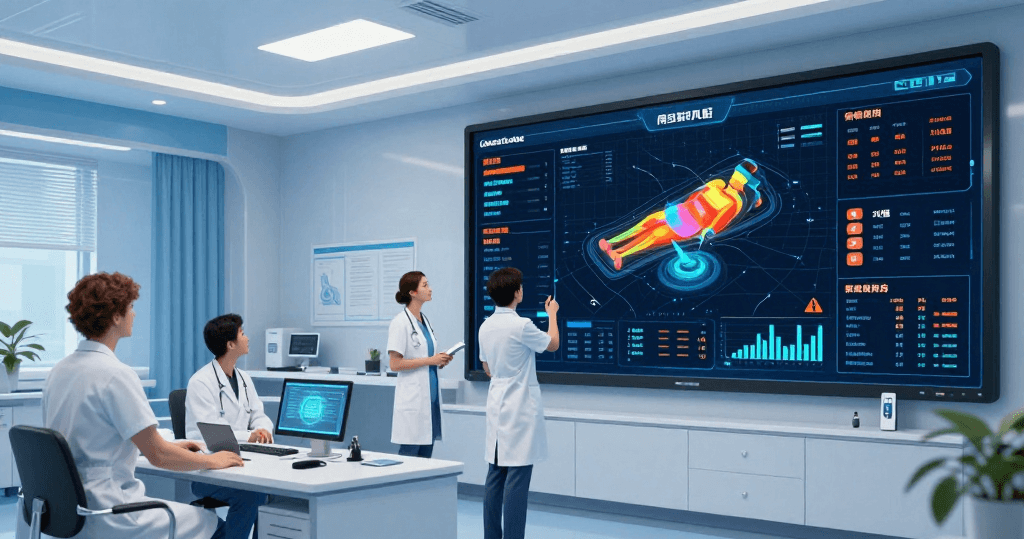
While standardized healthcare systems are widely available, many hospitals quickly discover that “the system has features, but does not fit the workflow.” The root cause lies in the structural differences in clinical operations and management models across hospitals, such as:
Outpatient scheduling, inpatient bed management, surgical scheduling, and laboratory & imaging report flows
Division of responsibilities and authority among physicians, nurses, administrative staff, and pharmacies
Requirements for data interoperability with internal or external healthcare institutions
Multi-campus, multi-specialty, and multilingual operational scenarios
These differences cannot be resolved by adding a few configuration options; they involve the workflow logic itself. Therefore, hospital management system development is the solution that can most comprehensively align with operational needs.
Further Reading: Hong Kong Healthcare Information System Guide: 5 Practical Evaluation Points & FAQs
Accurately representing daily hospital operations is the real challenge at the start of a Custom Medical Software project. From patient admission to diagnosis, examination, hospitalization, or discharge, each step involves multiple roles and information flows. If the system does not match the pace of physicians and nurses, even a fully-featured system can become a clinical burden.
Clinical Workflow: Map the actual sequence from registration, consultation, diagnosis, and examination to hospitalization and discharge. Understand how physicians and nurses operate in different scenarios to ensure system design fits the clinical rhythm rather than adding extra workload.
Management & Operations: Include scheduling, resource allocation, inventory, billing, and cross-departmental coordination. The system should not only serve front-line clinical staff but also support management in daily operations and decision-making.
Data & Compliance: Confirm medical record structures, data retention policies, access controls, and external data exchange requirements in advance to avoid large-scale structural changes due to regulations or interoperability after development.
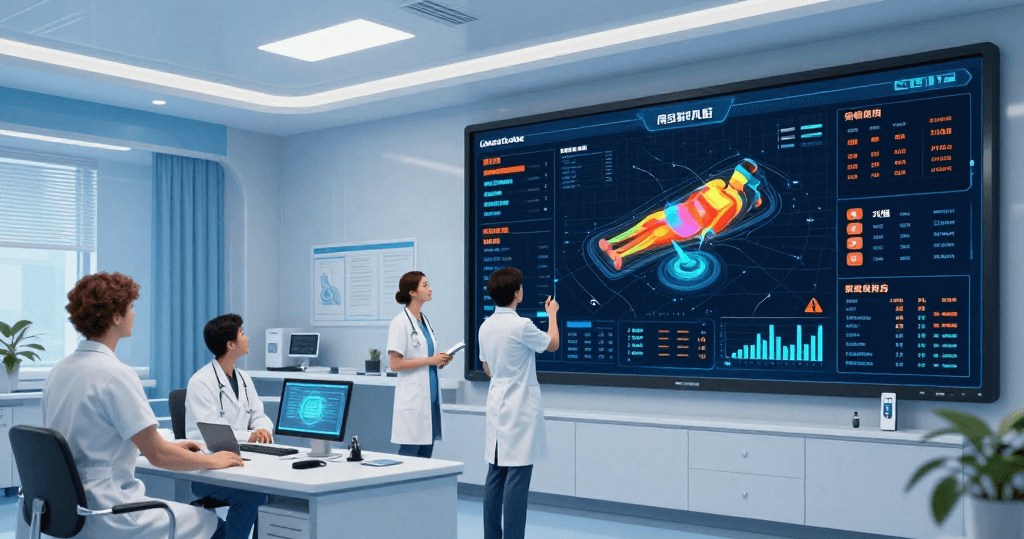
<img src="https://global-1321208151.cos.accelerate.myqcloud.com/newsImg/bdd9d686bcd84a3880f48944c845fd0d.jpeg" _src="https://global-1321208151.cos.accelerate.myqcloud.com/newsImg/bdd9d686bcd84a3880f48944c845fd0d.jpeg" alt="Smart Hospital Management System Design and Development | GTS'/>
After completing the requirement assessment, the Smart Healthcare Solutions Development phase officially begins. The core goal is to ensure the system is scalable, adaptable, and can operate continuously without disrupting daily operations.
1.Modular Design: Core functions such as outpatient, inpatient, surgery, pharmacy, laboratory, radiology, inventory, and CRM are split into relatively independent modules. Different departments can enable features in phases according to actual needs, avoiding disruption from a full-scale simultaneous launch and leaving room for future functional expansion.
2.Microservices Architecture: Each module can be independently tested, deployed, and upgraded. When a feature needs adjustment or optimization, it does not affect overall system operation, meeting the high stability requirements of healthcare environments while significantly reducing future maintenance and upgrade risks.
3.AI Feature Implementation: In the process of implementing a hospital information management system, AI is often the part management cares about most and is most likely to generate concerns. During deployment, related features (such as AI-assisted clinical workflows and data analysis) are typically planned alongside the core system but activated progressively to ensure existing clinical and administrative processes remain uninterrupted.
Additionally, during the system design phase, integration with existing systems, external platforms, and hospital data exchange requirements is carefully planned. Standard interfaces are used to avoid creating new information silos, ensuring the HIS medical information management platform operates smoothly across the entire healthcare ecosystem.
Go-live is the most sensitive stage in a hospital's digital transformation. Any mistakes can disrupt clinical and administrative operations. To reduce internal transition risks, mature projects typically follow a phased implementation, enabling core modules like electronic medical records, pharmacy, and imaging first. This allows clinical and administrative staff to become familiar with the system in a real environment while maintaining daily operations. Training and trial runs are conducted in parallel, with role-specific courses for physicians, nurses, administrative, and management staff to quickly master the workflows.
During this stage, GTS provides professional support in Custom Healthcare Software Development, offering the “Compliance Pre-Check – Security Hardening – Evidence Archiving” package. The system can obtain interoperability readiness certificates and ISO 27701 compliance statements at project acceptance, ensuring hospitals gain both regulatory and patient trust from day one of digitalization.
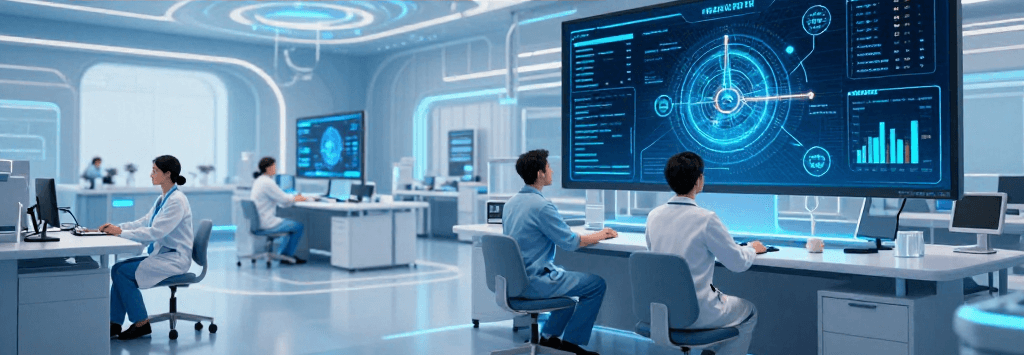
Custom-developed hospital management systems not only meet daily operational needs but also support long-term smart healthcare initiatives. GTS’s microservices architecture allows gradual iteration and upgrades, and the built-in intelligent features and modular design meet future cross-campus data exchange needs under evolving policies and clinical requirements.
Successful hospital information management system development means a hospital has not only a process-compliant system but also a sustainable digital foundation. Choosing a development partner with local experience and following standardized processes ensures HMS hospital management system development can be fully integrated into daily operations, smoothly implement system go-live and digital transformation, and help hospitals improve clinical efficiency, management capabilities, and long-term smart healthcare development.
This article, "Hospital Information Management System Custom Development Process: From Requirements Gathering to Go-Live" was compiled and published by GTS Enterprise Systems and Software Development Service Provider. For reprint permission, please indicate the source and link: https://www.globaltechlimited.com/news/post-id-13/