GTS News Center & Latest Updates
Your Most Professional Enterprise Systems and Software Custom Development Provider!



GTS News Center & Latest Updates
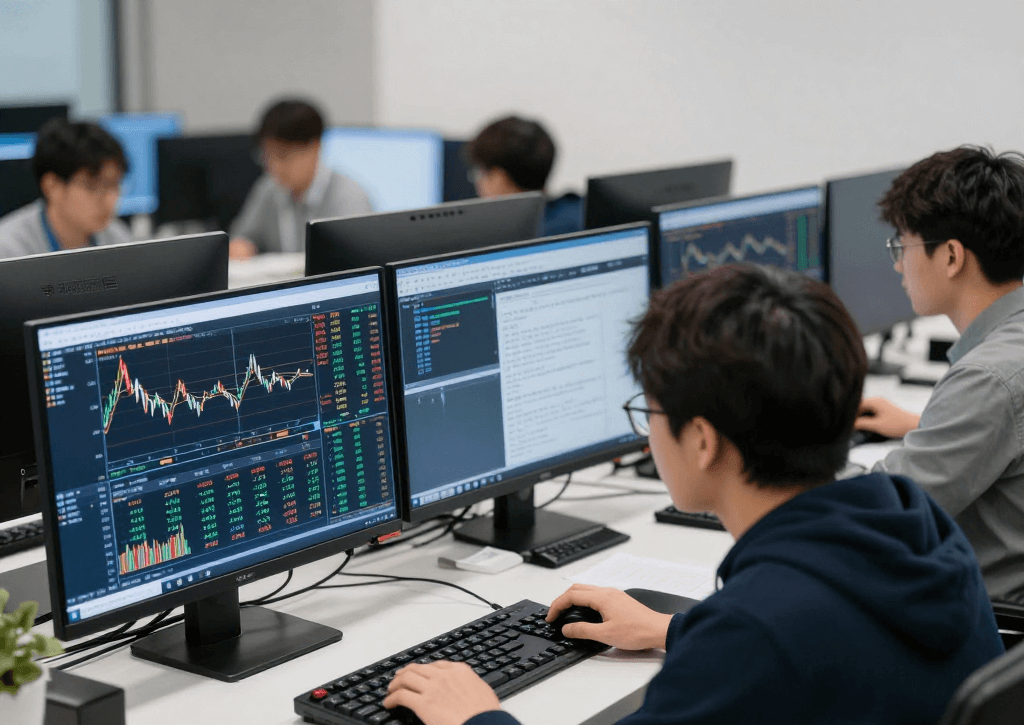
In the process of driving digital transformation, Hong Kong brokers no longer consider trading systems merely as backend technical support. They have become the core engine that directly impacts business responsiveness, product innovation, and compliance stability. Especially in the context of parallel operations across Hong Kong and US stock markets, the success of a broker's digital transformation often depends on whether the overall design of Hong Kong and US stock trading system development is forward-looking. Many organizations prioritize front-end applications or customer experience when starting digital transformation, while overlooking the scalability and architectural flexibility of the trading system itself. When business grows rapidly, new markets are integrated, or regulatory rules change, these underlying limitations quickly become bottlenecks in the transformation process. Based on development and deployment experience, Hong Kong and US stock trading system development commonly faces three unavoidable challenges: 1.Structural Complexity of Multi-Market Access Hong Kong and US stock markets differ significantly in trading hours, settlement rules, interface standards, and market behaviors. Without a well-designed market abstraction layer, the cost of future expansion can escalate rapidly. 2.Dual Requirements of Low Latency and High Stability For enterprise-level trading systems, performance is not a single metric. Systems must maintain consistency and predictability under high concurrency, market fluctuations, and simultaneous risk-control operations. 3.Long-Term Impacts of Regulatory and Compliance Differences Compliance requirements in Hong Kong and US markets are dynamic. If audit trails, recordkeeping, and regulatory adjustments are not integrated into the core architecture during the initial design, subsequent system modifications often involve significant costs. A common misconception during system selection is to evaluate primarily based on feature coverage. However, for brokers, the true value of an enterprise-level trading system lies in whether its underlying architecture supports long-term evolution. A well-designed architecture should clearly separate the trading core, risk-control modules, market data processing, and external interfaces, with strong modularization and decoupling capabilities. Such a design not only reduces single-point risks but also ensures stability when accessing new markets or products in the future. When evaluating system selection, you may refer to our previous article, “Securities Trading System Development: Critical Issues Hong Kong Brokers Often Overlook”, which helps understand common selection traps and highlights key considerations in architectural planning, providing practical guidance for current decisions. Mature Hong Kong and US stock trading system development should be viewed as a continuously evolving capability, rather than a one-off project. As business strategies adjust, product lines expand, and regulatory requirements evolve, the system must have the capacity for continuous optimization and selective refactoring. From a development and research team perspective, this means that even at the early stage, considerations such as sustainable technology stacks, standardized interfaces, and automated testing and deployment capabilities are necessary to avoid a situation where a small change impacts the entire system. For broker decision-makers, the critical choice is not whether to immediately replace the system entirely, but whether to adopt an architecture that can evolve over the long term. Many successful digital transformation cases do not start from scratch but achieve upgrades gradually through phased optimization and module refactoring. In practice, a financial services IT solutions team with extensive experience in the securities industry can assist organizations in evaluating architecture and planning system selection based on business processes and the current state of existing systems. This not only reduces trial-and-error costs but also shortens the digital transformation cycle. In GTS’s trading system development services, our team applies an enterprise-level perspective combined with Hong Kong-specific regulatory and operational requirements, designing a core architecture capable of sustainable evolution. This ensures a solid foundation at the early stage of digital transformation and prevents repeated high-cost investments due to selection mistakes. Hong Kong and US stock trading system development is not just a technical matter; it is a critical decision that determines the success of a broker’s digital transformation. When system architecture supports current business and reserves flexibility for future evolution, organizations can maintain long-term competitiveness in an intensely competitive market. GTS recommends consulting a professional team before embarking on digital transformation for a system architecture and selection review. By submitting requests through our online form, experienced securities industry consultants can provide one-on-one guidance, helping you assess whether your current system supports long-term evolution and preparing your organization for the next stage of growth: “Schedule your architecture and technical selection assessment now to receive tailored enterprise-level trading system recommendations.”I. Why Trading Systems Become the Core Engine in Broker Digital Transformation
II. Three Practical Challenges in Hong Kong and US Stock Trading System Development
III. Key Logic for Selecting Enterprise-Level Trading Systems: It’s About Architecture, Not Features

IV. Development Is Not a One-Time Delivery but an Evolving Capability
V. Strategic Choices: From New Build to Long-Term Evolving Architecture

Conclusion|Reserving the Right System Options for the Next Growth Stage