GTS News Center & Latest Updates
Your Most Professional Enterprise Systems and Software Custom Development Provider!



GTS News Center & Latest Updates
There are countless Hospital Management Systems available on the market. Yet why do so many hospitals find themselves increasingly constrained just one or two years after implementation?Many hospitals initially choose off-the-shelf systems (HIS/HMS) for their fast deployment and seemingly controllable costs. However, as campuses expand, specialties grow, and regulatory requirements increase, systems that once felt “good enough” gradually become obstacles to daily operations and digital transformation.
This is precisely the most common—and most underestimated—decision divide hospitals face when choosing between off-the-shelf systems and customized development.

From a practical perspective, off-the-shelf HIS/HMS solutions are not without value. For smaller healthcare institutions with relatively standardized workflows, they can effectively address basic needs such as registration, scheduling, billing, and medical record management in the short term.
Problems often emerge in the second phase, when hospitals begin to face the following situations:
Increasingly complex cross-department workflows: imaging, pharmacy, finance, and medical records operate in silos
Multi-campus or group-level management: off-the-shelf systems struggle to support unified governance across facilities
Growing integration requirements with external systems: such as government platforms, insurers, and partner healthcare institutions
Local compliance and workflow differences: Hong Kong’s healthcare regulations and operational realities are highly localized
At this stage, many hospitals realize that off-the-shelf HIS/HMS solutions are designed to be “generic,” not “tailored.” When a system cannot evolve alongside the hospital’s growth, it shifts from being a tool to becoming a constraint.
When decision-makers hear the term “customization,” their first reactions are often high cost, high risk, and long development cycles. In healthcare IT, however, customization does not mean rebuilding everything from the ground up.True Custom Healthcare Information System Development focuses on three critical layers:
1.Workflow-level design, not interface adjustments: whether the system reflects real clinical and administrative processes, rather than forcing staff to adapt to the system
2.Architectural scalability: whether the system can evolve with new specialties, campus expansion, and policy changes
3.Integration-first system thinking: whether it can reliably connect with existing imaging systems, financial platforms, government systems, or third-party services
Before deciding whether customization is necessary, there is a more fundamental question worth clarifying: what core functions and application scenarios should a complete HMS/HIS system ideally cover?
If you would like to first understand the basic structure, common modules, and practical use cases of hospital management systems from a holistic perspective, you may refer to our previously published article: “What is an HMS/HIS Healthcare Management System? Basic Functions and Application Scenarios.”You can then return to this article to evaluate which system approach better supports your hospital’s long-term development.
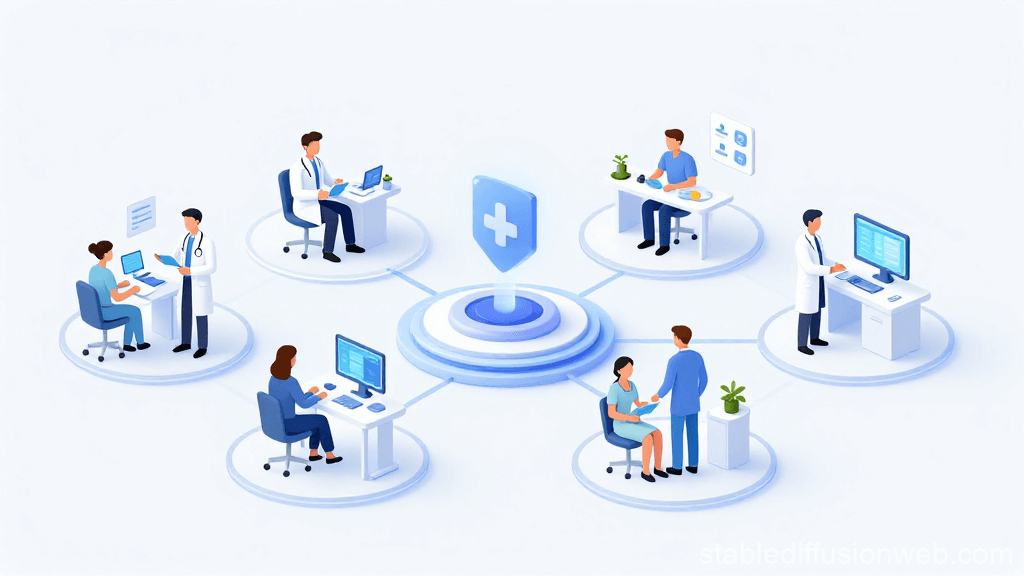
Across the projects we have participated in, many hospitals ultimately transitioned to customized solutions not because they wanted something “more advanced,” but because the hidden costs of their existing systems gradually surfaced.
Common risks of off-the-shelf HIS/HMS systems include upgrade schedules dictated by vendors, additional costs for deep integrations, limited cost predictability, rising long-term maintenance and licensing fees, and closed system logic that restricts flexible data usage.
By contrast, customized systems require greater upfront planning investment but offer clear advantages in several areas:
More predictable total cost of ownership (TCO)
Reduced risk of vendor lock-in
Stronger support for future AI, data analytics, and smart healthcare expansion
This is not about which option is “better,” but rather how each aligns with a hospital’s three- to five-year operational vision.
Instead of asking “Should we customize?”, hospitals may find it more useful to answer the following questions. If the answers are mostly yes, then planning the hospital management system with a scalable architecture from the outset becomes essential:
Do we expect to expand campuses or service offerings in the future?
Will we need extensive data exchange with government bodies or external healthcare institutions?
Are there already clear signs that existing workflows are being constrained by current systems?
Does management want to use data to support operational oversight and decision-making?
Taking one large private healthcare institution in Hong Kong that GTS previously supported as an example, the hospital initially operated multiple independent systems. Each system functioned on its own, but integration was limited.
During the restructuring process, the team did not attempt a one-time replacement. Instead, they:
Mapped out core clinical and administrative workflows
Established a unified data and integration architecture
Gradually connected imaging systems, query platforms, and external systems
Reserved expansion capacity for AI and data analytics
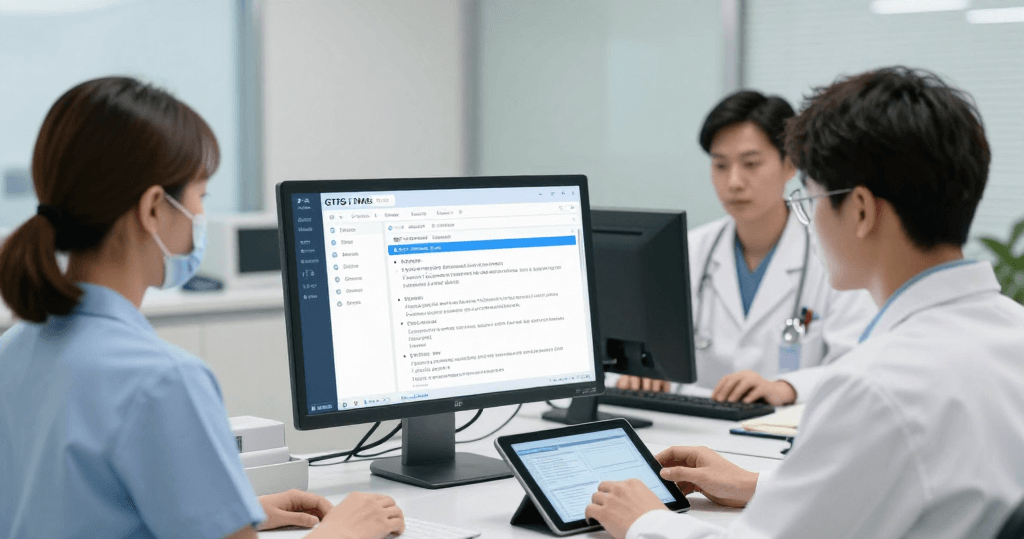
The result was a HIS/HMS platform that could evolve alongside the hospital’s strategic direction, rather than a static system. This approach represents a key differentiator in the successful implementation of smart healthcare initiatives.
Ultimately, whether a hospital chooses an off-the-shelf solution or Custom Hospital Management System Development, what truly matters is not technical terminology, but whether the system can support future operations, compliance requirements, and long-term growth. A hospital management system is never just an IT project—it is a long-term digital infrastructure investment.
If your team is currently evaluating a next-generation HMS or HIS, we invite you to learn more about GTS’s end-to-end system development and customization services in the smart healthcare domain:Submit your requirements to schedule a dedicated consultation, and let us help you plan a more sustainable digital transformation path for your hospital.
This article, "Custom Hospital Information Systems vs Off-the-Shelf Solutions: How Should Hospitals Choose?" was compiled and published by GTS Enterprise Systems and Software Development Service Provider. For reprint permission, please indicate the source and link: https://www.globaltechlimited.com/news/post-id-21/