GTS News Center & Latest Updates
Your Most Professional Enterprise Systems and Software Custom Development Provider!



GTS News Center & Latest Updates
When GTS engages with brokers, proprietary trading teams, and fintech leaders in the Hong Kong market, we frequently hear a similar question: Is building a quantitative trading system really worth a long-term investment? Behind this question is rarely doubt about strategy effectiveness. Instead, it reflects very real concerns about uncontrollable risk, regulatory uncertainty, and distorted long-term costs.
From the dual perspective of quantitative trading research and system product development, we know this clearly: quantitative trading system development is never a one-off technical decision. It is a long-term initiative that continuously impacts operational stability, regulatory safety, and capital efficiency over a three- to five-year horizon. If you are preparing to launch or re-evaluate a quantitative trading system, we recommend first reviewing our previous article, “Quantitative Trading System Development: Building Automated, Low-Latency Trading Infrastructure” and then reassessing your overall architecture through the combined lenses of risk, compliance, and cost discussed in this article.

If the following critical dimensions are overlooked during the early design phase, a quantitative trading system may still go live successfully—only to expose serious structural weaknesses as business scale expands.
In real trading environments, the most common issue we observe is not “model failure,” but misalignment between strategy assumptions and actual system execution.
For example, a strategy may assume decisions are made based on real-time market data, while the system is in fact processing delayed feeds. A strategy may expect orders to be split and routed according to predefined logic, yet under high-concurrency conditions, the system follows an entirely different execution path.
These issues rarely appear in backtesting, but are quickly amplified under the following conditions:
Rapid market movements where data updates fall out of sync with decision cycles
Hidden latency between order splitting, risk checks, and execution feedback
Unpredictable internal system behavior during periods of high volatility
When execution outcomes no longer align with strategy design, risk is rarely identified immediately. Instead, it accumulates quietly until it erupts during an extreme market event. This is why mature quantitative trading systems must govern and monitor both model outputs and execution pathways—rather than relying solely on strategy-level self-correction.
By nature, a quantitative trading system is not a conventional IT system. Its defining characteristics include continuous operation, high-concurrency processing, and extreme sensitivity to anomalies. In such an environment, system stability itself is a core component of trading capability.
If horizontal scalability and high-concurrency scenarios are not properly addressed during initial architecture design, performance bottlenecks can quickly turn into direct trading risks during periods of market volatility or rapid volume growth. In practice, technical risks often escalate into business risks under situations such as:
Unstable market data sources or degraded data quality
Single points of failure within critical system modules
Lack of real-time information alignment between operations and trading teams
The most dangerous quantitative trading systems are often not those that crash frequently, but those that appear stable while remaining opaque and difficult to audit.
Examples include systems where decision paths cannot be fully traced, audit-ready logs are incomplete, or risk controls are scattered across multiple modules with unclear ownership.
These structural issues may not cause immediate losses, but they allow risk to remain embedded within the system. When trade reconstruction, regulatory inquiries, or rapid strategy adjustments become necessary, the system itself becomes the greatest obstacle.

Based on our research and real-world experience, whether a clear governance framework is established at the architectural level often determines whether a quantitative trading system can operate safely and sustainably—not merely how fast it can run. Systems built for long-term viability clearly define the responsibilities between strategy, trading, risk control, clearing, and monitoring, ensuring that changes to any single module do not trigger systemic ripple effects.
When a quantitative trading system spans Hong Kong equities, U.S. markets, and even virtual asset-related venues, compliance is no longer a pre-launch checklist—it becomes a continuous constraint shaping how the system operates.
Many teams initially treat compliance as a pre-go-live approval process. In reality, regulatory requirements continuously influence trade recordkeeping, risk execution logic, and post-trade audit and traceability capabilities.
Within the Hong Kong regulatory environment, systems must not only address differences in how trading behavior is defined across jurisdictions, but also meet expectations for real-time risk controls, data retention, and explainability. If these requirements are not embedded at the architectural level, teams are often forced into “reactive compliance” through incremental patches—resulting in increased system complexity and reduced overall stability.
When evaluating budgets for quantitative trading system development, most institutions naturally focus on delivery timelines and upfront investment. However, systems that appear cost-efficient in the early stages often reveal substantial hidden expenses as trading volume grows, strategy complexity increases, or new asset classes are introduced.
These costs typically surface not as one-time expenditures, but through ongoing system refactoring, performance optimization, and compliance adaptation.
From a three- to five-year perspective, the true cost of a quantitative trading system is determined far more by whether its architecture can sustain long-term operations than by how quickly it can be delivered. Systems that reserve sufficient architectural flexibility early on consistently achieve stronger long-term return on investment.
For most Hong Kong financial institutions, the real challenge in quantitative trading system development is not choosing between speed, compliance, or cost—but establishing a balance that can operate sustainably without repeated rebuilds. Our project experience shows that optimizing for a single dimension—whether extreme performance, minimal cost, or maximum compliance—often leads to significantly higher total costs as systems scale or market conditions evolve.
A more sustainable path lies in clear system layering and modular design. This allows trading performance, risk logic, and compliance requirements to coexist within a single architecture—each fulfilling its role without constraining the others. When performance optimizations do not require changes to core risk controls, and compliance adjustments do not force trading workflow rewrites, systems can grow while remaining stable and predictable.
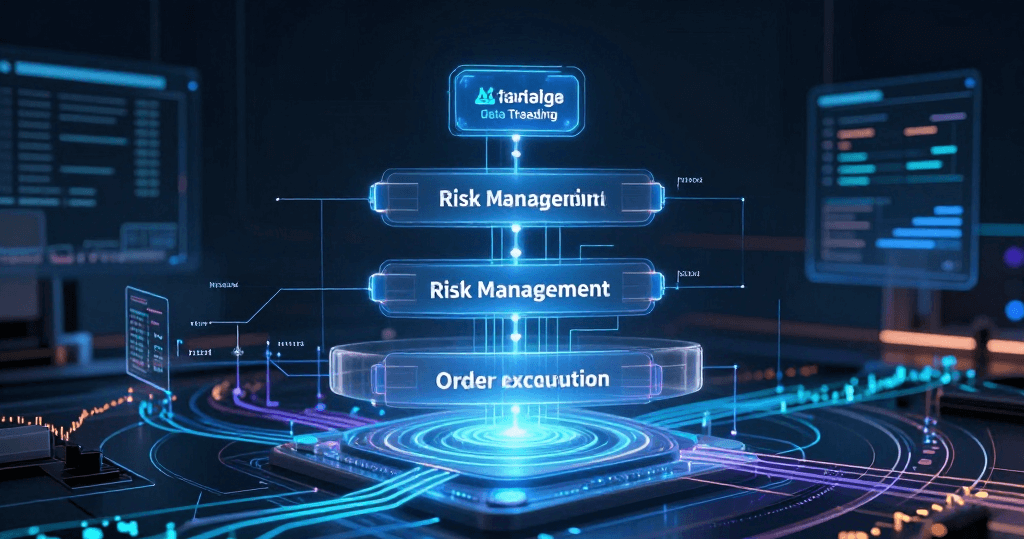
In GTS’s real-world projects, we have supported multiple licensed institutions in building full-stack quantitative trading systems covering market data processing, order matching, clearing, fund settlement, and account management. By reserving architectural flexibility for compliance adjustments and business expansion, these systems not only pass live trading stress tests but continue evolving alongside regulatory and market changes. At the same time, high-performance matching engines and high-density market data processing enable sustained growth in trading volume and product coverage without sacrificing stability.
If you are preparing to launch a quantitative trading system development project and wish to comprehensively assess system risk, regulatory pathways, and total cost over the next three to five years, we invite you to engage with the GTS team for a strategic-level discussion. If you already operate an existing trading system and seek a professional evaluation of performance bottlenecks, architectural risks, or compliance scalability, we can also provide targeted technical consulting and assessment services—request your solution and pricing proposal at no cost.
This article, "Risk, Compliance, and Long-Term Cost in Quantitative Trading System Development" was compiled and published by GTS Enterprise Systems and Software Development Service Provider. For reprint permission, please indicate the source and link: https://www.globaltechlimited.com/news/post-id-23/