GTS News Center & Latest Updates
Your Most Professional Enterprise Systems and Software Custom Development Provider!



GTS News Center & Latest Updates
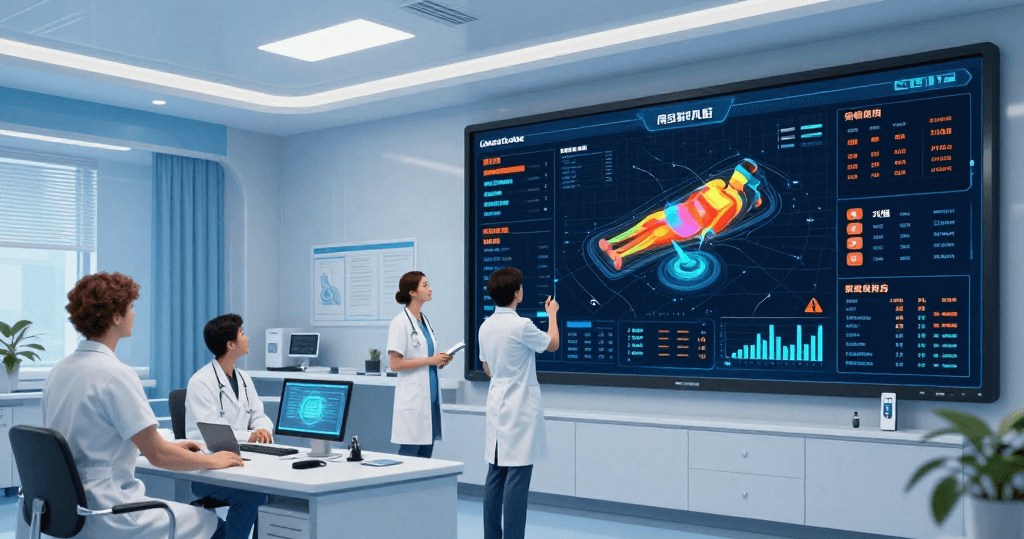
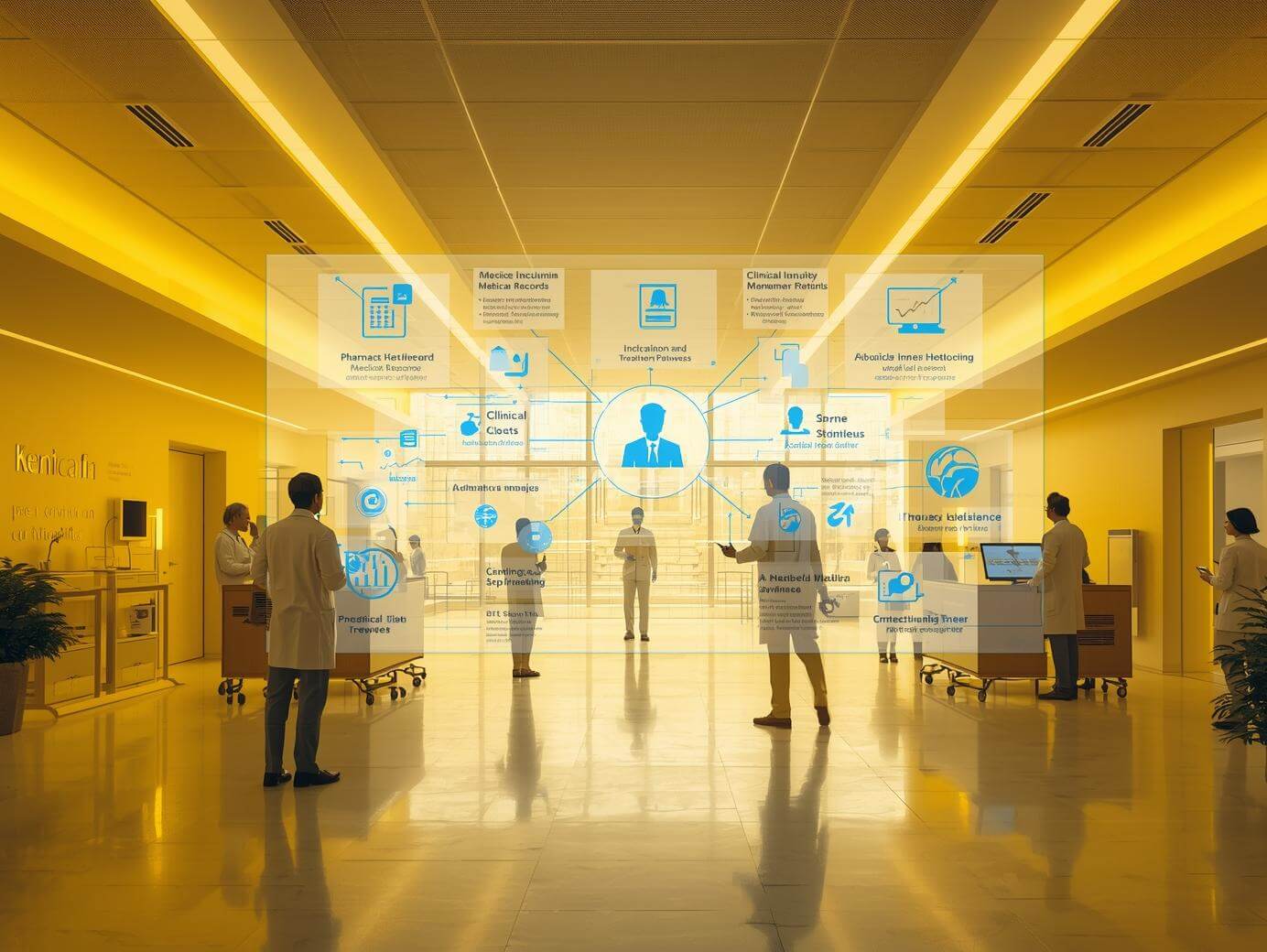
Within Hong Kong’s private healthcare sector, hospitals and large medical groups have largely completed their digital transformation in recent years. Yet many executives continue to face a shared challenge: as systems increase, decision-making does not necessarily become faster or more accurate. Electronic medical records (EMR), pharmacy management, imaging systems, and bed and staff scheduling data are often scattered across multiple platforms. As a result, management teams still rely heavily on manually consolidated reports to understand daily operations. Even when data is “visible,” it is not always “actionable,” let alone capable of supporting real-time or predictive decision-making. This is precisely why Hospital Information System Development driven by AI has gained increasing attention in Hong Kong in recent years. When AI evolves from a standalone analytical tool into a capability deeply embedded within the HIS architecture, healthcare organizations can truly move toward sustainable smart healthcare solutions. Many healthcare institutions have already implemented hospital information management software. However, in real-world operations, three structural limitations remain common. First, reporting delays reduce decision timeliness. Second, limited integration across system modules. Third, data is recorded but not predictive. Through risk modeling and clinical data analysis, AI can provide real-time alerts and decision support within clinical workflows. Examples include identifying high-risk patients and correlating diagnostic results, helping clinicians improve patient safety without increasing their workload. At the operational level, AI can analyze bed utilization, staff scheduling patterns, and pharmacy inventory cycles to predict peak periods and resource demand. This reduces manpower waste and patient waiting time, which is a core objective for many healthcare institutions adopting AI healthcare services. With real-time dashboards and KPI forecasting models, management teams can monitor key operational indicators instantly, shifting from post-event reviews to proactive adjustments and significantly improving both decision speed and accuracy. High-value AI healthcare software is not designed to replace medical professionals, but to transform data into actionable insights. While the market offers many standalone AI analytics tools, practical experience shows that sustainable value comes from deep integration between AI and HIS—combined with workflow design, access control, and compliance frameworks. Only when AI operates directly within the HIS core architecture can data timeliness, decision consistency, and audit traceability be ensured. This is why more healthcare organizations are turning toward custom medical system development as a strategic choice. In the local context, executives should focus on the following factors when introducing AI-powered HIS: (1) Data interoperability with HA and existing systems (2) Privacy, cybersecurity, and PDPO compliance requirements (3) Support for future scalability and functional evolution (4) The long-term operational impact of custom-built versus off-the-shelf systems For a deeper discussion on choosing between custom and packaged solutions, we recommend our earlier analysis: “Custom Hospital Information Systems vs Off-the-Shelf Solutions: How Should Hospitals Choose?” From a practical standpoint, AI-driven hospital management system initiatives are no longer simply IT projects—they are an integral part of operational strategy. By developing hospital systems through a customized approach, healthcare organizations can design AI models around their own workflows rather than forcing operations to adapt to rigid software structures. This also helps reduce long-term IT and operational risks. Such customization strategies are particularly suitable for private hospitals, specialty centers, and healthcare groups. For operational leaders, AI-driven Hospital Information System Development is not merely a technology upgrade. It addresses three fundamental questions: Can decisions be made faster? Can the system evolve sustainably? Are long-term operational risks controllable? If your organization is evaluating the next phase of HIS/HMS upgrades, this is the critical moment to reassess system architecture and decision capabilities. The GTS healthcare technology team specializes in enterprise-grade HIS/HMS system development and integration tailored to Hong Kong’s healthcare environment. We help management teams embed AI into clinical and operational decision-making in a practical, compliant manner. Engage with our consultants to explore the most suitable AI-driven healthcare system development strategy for your organization.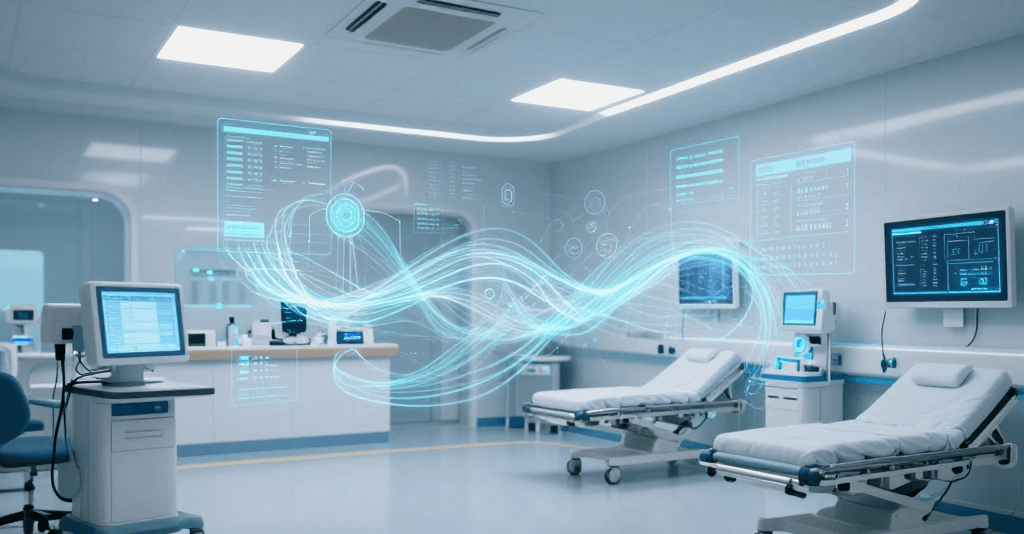
1. Why Traditional HIS Struggles to Support Executive Decision-Making
Most traditional HIS platforms focus on retrospective statistics, with reports requiring manual processing. As a result, executives can usually see only what has already happened, rather than what is likely to happen next.
Clinical, pharmacy, imaging, and financial data often exist in silos, making cross-departmental analysis difficult. This leads resource allocation and operational decisions to rely heavily on experience rather than data-driven insight.
Without intelligent analytics, systems function primarily as data repositories. They cannot proactively identify risks or generate optimization recommendations, limiting the depth and quality of management decisions.2. How AI Redefines the Decision-Making Role of HIS
AI enhances clinical decision quality
AI improves hospital operational efficiency
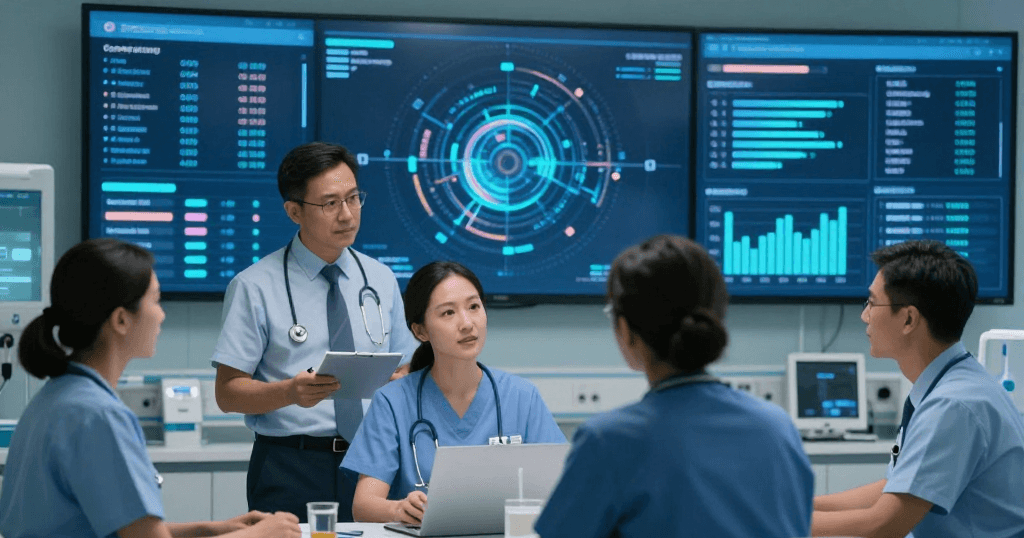
AI supports real-time executive decision-making
3. Why AI Must Be Embedded in HIS, Not Added as a Standalone Tool
4. Key Considerations for Hong Kong Healthcare Institutions Implementing AI-Driven HIS
5. Why More Institutions Are Choosing Customized AI HIS