GTS News Center & Latest Updates
Your Most Professional Enterprise Systems and Software Custom Development Provider!



GTS News Center & Latest Updates
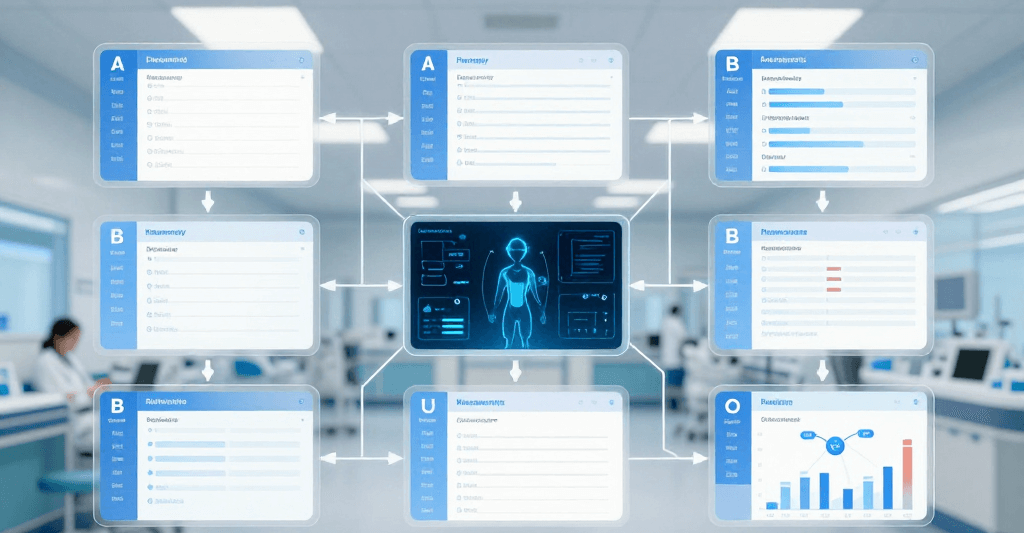
Within Hong Kong’s private healthcare ecosystem, hospitals, specialty centers, and chain clinics are simultaneously facing multiple pressures, including expanding operational scale, rising regulatory requirements, and increasing workforce constraints. For senior leadership, whether to invest in custom healthcare system development is no longer merely a technical consideration, but a strategic decision that directly impacts cost structure, decision-making efficiency, and long-term operational risk. When evaluating system upgrades, many executives are not asking “Can it be done?” but rather “Is it worth doing?” This article provides a comprehensive analysis of the true investment and value of customized healthcare systems from three perspectives: cost structure, hidden risks, and actual returns. In healthcare system projects, feature lists are often the first step in cost estimation. In practice, however, the real cost differentiation lies not in the number of modules, but in their depth. Common modules such as EMR, online appointment booking, pharmacy management, medical imaging, bed management, and AI-driven decision support may appear to be standard offerings. Yet in real-world usage, whether these modules support multi-specialty workflows, cross-role permissions, clinical pathway configuration, and real-time decision prompts has a direct impact on system design complexity and development effort. The difference between “functionally available” and “truly embedded into clinical and operational workflows” often represents two entirely different cost levels. For most healthcare institutions in Hong Kong, systems are not built from scratch. Instead, they must integrate with existing HIS, HIMS, PACS, LIS, and even third-party financial or workforce scheduling platforms. Each integration point involves data structure alignment, workflow synchronization, and error-handling mechanisms. When further data exchange with the Hospital Authority (HA) or external platforms is required, the demands on security and real-time performance increase significantly. This is why, in hospital system development practice, experienced teams typically start by mapping critical workflows and then design the integration architecture accordingly, rather than simply stacking interfaces. In Hong Kong, PDPO requirements for patient data privacy mean that healthcare systems must be built with comprehensive access controls, role-based permissions, and audit logging from the outset. If these elements are overlooked in early design phases, retrofitting them later often requires major architectural changes—at a cost far higher than getting it right the first time. Many healthcare organizations initially choose off-the-shelf systems due to budget constraints or faster deployment timelines. However, licensing fees have never equaled total cost of ownership (TCO). Common hidden costs include secondary customization, workflow compromises, and extensive manual workarounds. When systems cannot align with real operational needs, frontline staff resort to spreadsheets, manual reconciliation, or repeated data entry to “patch” system gaps—ultimately slowing down overall efficiency. It is often only after operational scale increases that organizations fully recognize the cost of limited system flexibility and integration constraints. We have explored the decision logic between customized and off-the-shelf systems in depth through real healthcare case studies in a previous article: “Custom Hospital Information Systems vs Off-the-Shelf Solutions: How Should Hospitals Choose?”. Meaningful ROI comes from measurable improvements in operational metrics—such as higher bed turnover rates, more accurate staff scheduling, and reduced waste in pharmacy and medical supply inventory. When systems can reflect these metrics in real time, IT investments become management decision tools rather than merely back-office support. Through real-time dashboards and predictive KPIs, leadership teams can move beyond retrospective reviews to proactively identify risks and bottlenecks. “Data that is visible and actionable” has become a key reason why healthcare system development services are receiving growing attention. Another critical return of customization lies in future scalability. Whether expanding to new campuses, adding new specialties, or continuously layering AI and smart healthcare capabilities, a flexible system architecture keeps future investments under control. Not all organizations require the same level of customization. Generally, private hospitals and healthcare groups benefit most due to complex workflows and clear economies of scale. Specialty centers and chain clinics, on the other hand, must assess customization needs based on their growth stage and integration requirements. The key factor is not organizational size, but whether the system needs to support differentiated operational models—an essential question leadership must clarify when evaluating customized healthcare management systems. Key Criteria for Hospital IT Leaders When Selecting a Development Partner:For CIOs and IT teams, partner selection goes far beyond technical capability alone. Does the partner truly understand clinical and operational workflows? Do they have proven experience in multi-system integration? And can they provide a long-term evolution roadmap rather than a one-time delivery? These factors are often decisive for project success. The core value of custom healthcare system development lies not merely in “cost savings,” but in faster decision-making, system sustainability, and long-term operational risk control—making it an investment in future competitiveness. When existing healthcare systems can no longer support operational scale, cross-system integration, or future smart healthcare initiatives, the issue is not simply replacing software, but re-evaluating the entire information architecture. At this stage, the GTS healthcare team can assist organizations in assessing the real costs, risks, and returns of system restructuring or custom healthcare system development within the context of Hong Kong’s healthcare environment—ensuring every IT investment delivers tangible operational value.
I. What Factors Determine the Cost of a Customized Healthcare System?
1. Functional Scope and Module Depth: Not “Whether It Exists,” but “How Deeply It Is Used”
2. System Integration and Data Interoperability Costs: The Most Commonly Underestimated Factor
3. Compliance, Privacy, and Security Design: Costs That Cannot Be Fixed Later
II. Why Do Off-the-Shelf Systems Appear Cheaper but Cost More in the Long Run?
III. How Should Healthcare Organizations Evaluate the True ROI of a Customized Healthcare System?
1. Quantifiable Operational Efficiency Gains: Can Leadership Actually See Them?
2. Enhanced Clinical and Management Decision-Making
3. Long-Term Evolvability of IT Architecture
IV. Is Customized Development Suitable for Every Healthcare Organization?

V. From IT Cost Control to Sustainable Operational Competitiveness