GTS News Center & Latest Updates
Your Most Professional Enterprise Systems and Software Custom Development Provider!



GTS News Center & Latest Updates
Faced with the increasing digitalization needs of healthcare institutions, more and more clinics, specialist centers, and medical groups are shifting from traditional on-premises systems to cloud-based healthcare information systems. Cloud-based systems not only improve maintenance costs and scalability but also offer greater benefits in multi-site collaboration, data synchronization, and security compliance.
This article will introduce the operation, target audience, advantages and disadvantages of cloud-based HMS/HIS from a perspective understandable even to those without a technical background, as well as the issues that enterprises often overlook when developing hospital HIS systems.

Cloud-based HMS and HIS are essentially core platforms used by healthcare institutions to manage clinical, process, and operational data. The two systems largely overlap in functionality, differing only in their naming conventions:
HIS (Hospital Information System): Focuses on clinical and medical data management, such as medical records, prescriptions, and laboratory diagnostics;
HMS (Hospital Management System): Focuses on operational management and administrative processes, such as scheduling, billing, inventory, and personnel management.
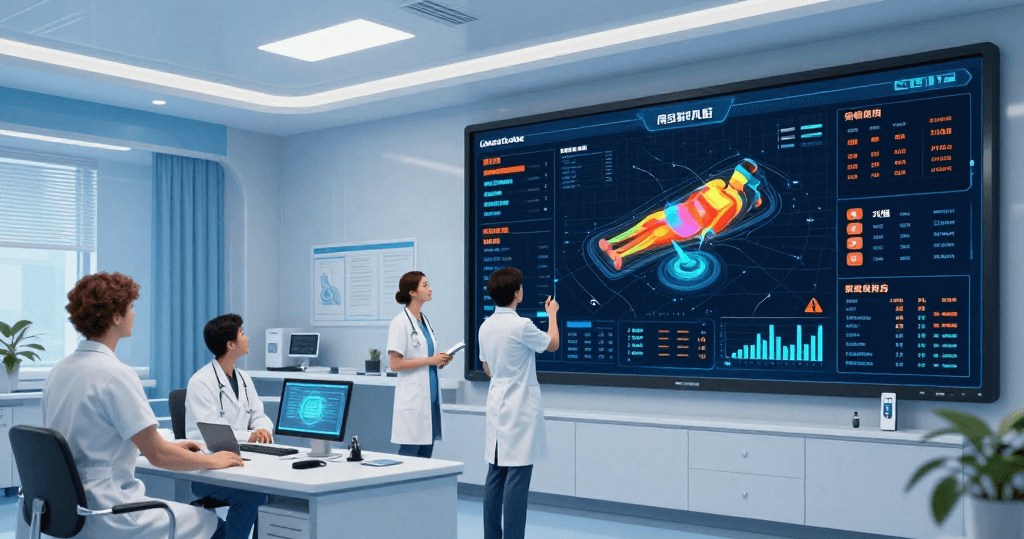
In a cloud-based architecture, HIS and HMS can be integrated into a single healthcare information system. Healthcare professionals can access this system in real-time across different hospital campuses, clinics, or mobile settings via web pages or applications. This is particularly suitable for healthcare institutions requiring high mobility, multi-scenario treatment, or cross-campus collaboration.
The system centralizes all medical records, scheduling, and laboratory data in the cloud, automatically synchronizing across all platforms to create a unified data standard. It also allows for on-demand expansion of computing and storage resources, eliminating the need for self-built servers and making IT costs more controllable. The cloud platform also possesses native redundancy capabilities, providing high availability and disaster recovery to ensure critical processes are not affected by single points of failure. For chain clinics and medical groups, real-time cross-site data sharing can improve operational efficiency, ensuring consistency between decision-making, financial, and clinical information, and enabling sustainable expansion.
Cloud-based medical information systems are not limited to large hospitals; various medical service institutions can benefit from them. Here, GTS focuses on institution type to explain implementation scenarios and the actual effects they can bring.
Small and medium-sized clinics typically aim to reduce setup costs and improve diagnostic and treatment efficiency. Cloud-based HIS/HMS eliminates the need for local servers; staff can quickly switch devices in consultation rooms, reception areas, and examination areas; and can be expanded instantly when medical staff or equipment are added. This is particularly suitable for clinic environments that require cross-departmental sharing of prescriptions, schedules, and medical records.
Advantages: Fast implementation, low cost, simple maintenance
Possible limitations: Backup connections need to be planned if network quality is poor
These institutions value cross-site collaboration and unified standards. Cloud-based HIS/HMS supports shared patient records across multiple hospital campuses, unified finance and inventory, and allows management to remotely view operational status.
Advantages: Strong consistency across multiple locations, automatic data synchronization, and transparent management.
Possible limitations: Further development of access control and security strategies is required for cross-campus operations.
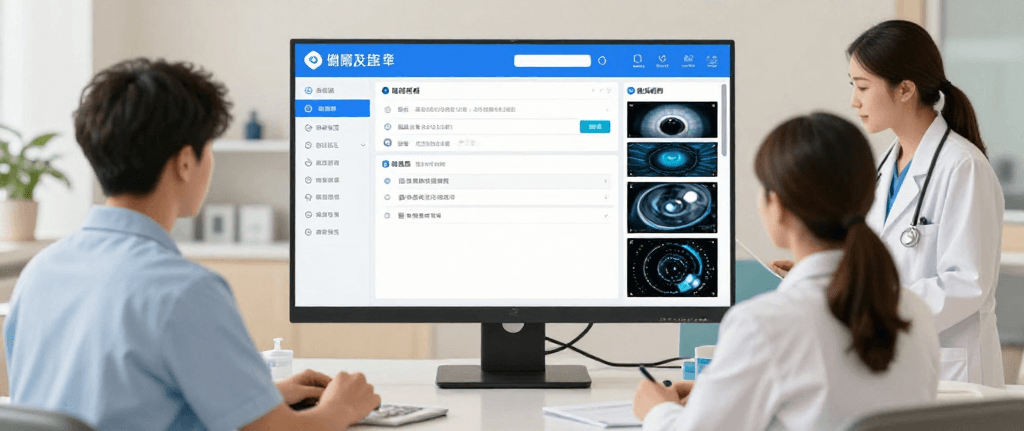
Large institutions are gradually shifting from traditional on-premises deployments to hybrid cloud to cope with the surge in data volume, the need for external system integration (AI, imaging, insurance platforms), multi-campus collaboration, and data center cost pressures.
Advantages: Excellent scalability, more effective implementation of AI and big data.
Possible limitations: Requires strict compliance review and secure cloud deployment.
These services emphasize mobility. Cloud-based solutions allow healthcare workers to access medical records while on the go, automatically synchronize records for remote consultations, and enable community workers to input data in real time using tablets. Advantages: High mobility, excellent integration with smart devices
Possible limitations: Attention must be paid to the stability of mobile networks
Even with a suitable cloud system, many medical institutions still encounter difficulties when implementing HIS/HMS. The following three issues are particularly critical, yet most easily overlooked.
Most medical institutions already run multiple existing systems before implementing HIS, such as scheduling software, medical imaging systems (PACS), laboratory systems (LIS), financial or accounting systems, and various clinic management tools. The existence of these existing systems directly affects subsequent integration strategies and data transfer methods.
If the existing data formats of the medical institution are inconsistent, the cost of implementing or integrating HIS will often increase exponentially, and additional manpower may be required for data cleaning. Therefore, at the beginning of the project, it is essential to clearly define the master data, assess whether the existing system should be retained or replaced, and plan a seamless transfer method for medical records and treatment data to avoid the risk of repeated adjustments and integration failures later on. In hospital HIS system development and integration projects, GTS typically assists companies with data inventory and process streamlining beforehand to avoid rework later.
If medical institutions rush to launch their HIS systems before standardizing processes, problems often arise such as different usage methods across departments, unclear patient flow, inability of medical staff to adapt, and constant IT modifications. The correct approach is to first clarify the current situation with flowcharts, then reach a consensus among departments on future processes, and only then configure the system according to the processes, rather than forcing the system to conform to chaotic processes.
In Hong Kong, medical information systems must simultaneously comply with the Personal Data (Privacy) Ordinance (PDPO), medical record retention policies, data access and audit requirements, and multi-level security standards such as HTTPS, data encryption, and role-based access control. However, many institutions mistakenly believe that cloud platforms are "inherently secure," ignoring that cloud providers are only responsible for infrastructure security, while application-layer data protection still needs to be planned by the medical institutions themselves.
When assisting enterprises in developing cloud-based healthcare information systems, GTS simultaneously provides: access control architecture design, encryption standard recommendations, operational auditing, cybersecurity redundancy, and best practices for cloud deployment. This allows organizations to establish a long-term, reliable, and sustainable security framework while complying with Hong Kong regulations.

Whether it's a clinic, a chain medical center, or a large hospital, cloud-based healthcare information systems offer greater flexibility in terms of efficiency, scalability, security, cost, and smart healthcare deployment. However, successful implementation requires more than just system selection; it necessitates integrated planning across three key areas: data structure, process standardization, and security compliance.
GTS's smart healthcare management system development services encompass cloud-based HIS/HMS system development, legacy system integration, process optimization, data standardization, AI module deployment, and cross-site collaborative architecture design, assisting enterprises in gradually completing their healthcare digital transformation.
This article, "Which Organizations Are Suitable for Cloud-Based HMS/HIS Healthcare Information Systems? Advantages and Disadvantages Analysis" was compiled and published by GTS Enterprise Systems and Software Development Service Provider. For reprint permission, please indicate the source and link: https://www.globaltechlimited.com/news/post-id-4/