GTS News Center & Latest Updates
Your Most Professional Enterprise Systems and Software Custom Development Provider!



GTS News Center & Latest Updates
In the Hong Kong healthcare environment, whether it's a private hospital, chain clinic, or specialist center, digitalization is no longer an "upgrade option" but the foundation of daily operations. When planning a system, many organizations encounter two common questions: What modules should an HMS medical information management system include? And is customized medical software development worth the investment? This GTS article will guide you step-by-step from a practical perspective of the Hong Kong healthcare market to understand how to choose a system solution that truly suits your development.
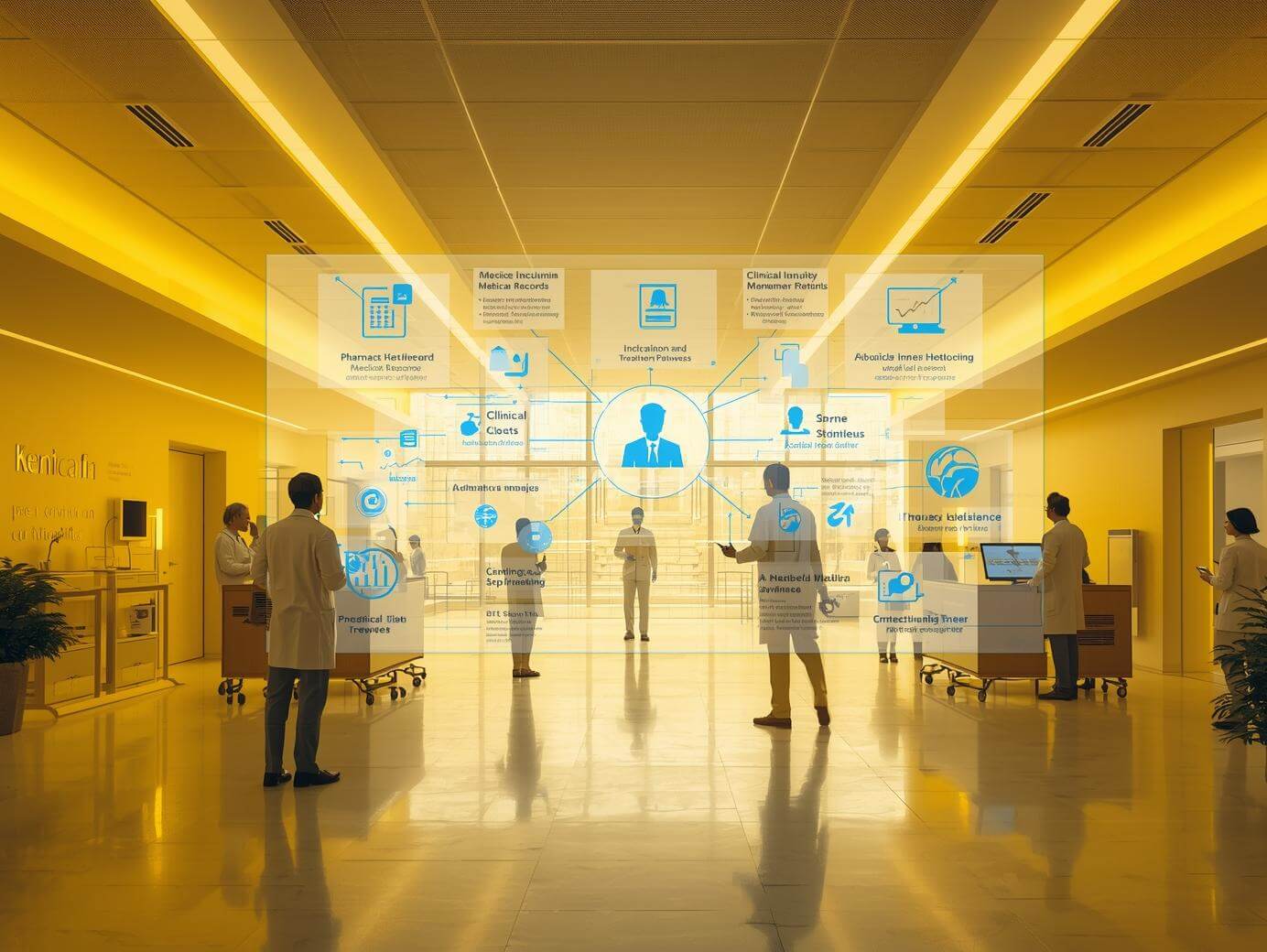
An HMS (Hospital Management System) is a digital platform that integrates medical, administrative, and operational processes. Due to the varying sizes, treatment models, and management needs of different medical institutions, HMS is usually presented in a "modular" manner, forming various types and application directions. The following are the main categories categorized by common business scenarios:
These focus on improving the efficiency of medical and administrative operations and are commonly found in outpatient centers and general medical institutions. Common modules include: Patient Management System (PMS), Medical Workflow System, and Billing and Settlement System. The core of these systems is to standardize processes, reduce human error, and improve the efficiency of patient reception and inpatient treatment.
Designed according to the business characteristics of different medical specialties, such as: Imaging and Laboratory Management (PACS/LIS integration), Dental Management System, and Physical Examination and Health Management System. Suitable for institutions primarily providing specialty services, used to improve the consistency and professionalism of departmental operations.
Focusing on hospital administration and business operations monitoring to support chain and large-scale development. Common modules include: Administrative Management and Scheduling System, Inventory and Materials Management System, and Medical BI Data Decision System. Its value lies in assisting management to grasp the overall operational picture across departments and hospital campuses.
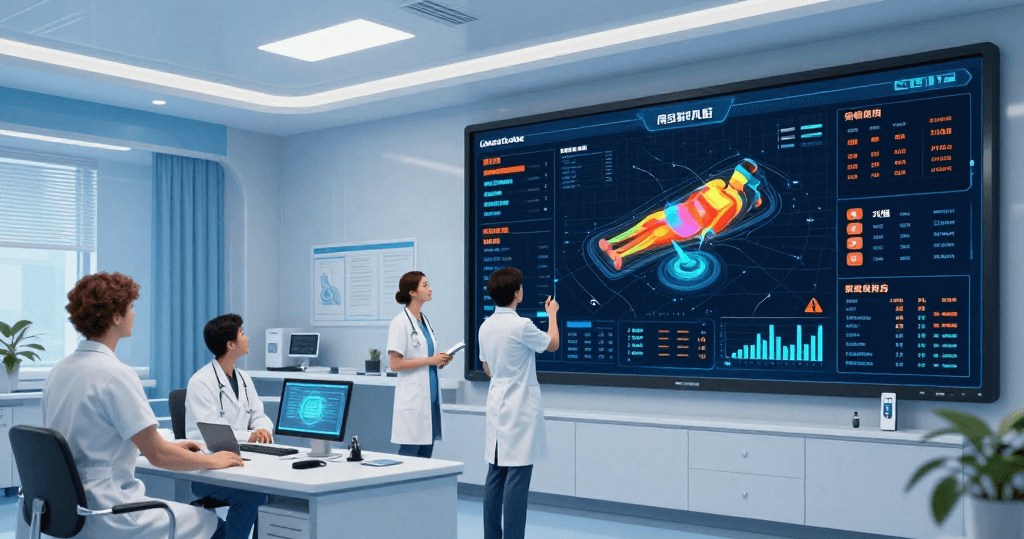
Systems extending from AI technology and telemedicine needs, such as AI triage/consultation, smart scheduling and waiting room analysis, and integration of telemedicine platforms with wearable devices. Suitable for healthcare companies seeking to differentiate themselves from competitors and improve decision-making efficiency.
An HMS (Healthcare Information Management System) is not merely an "electronic medical record" tool, but a modular digital platform that integrates clinical, administrative, and operational management functions, allowing for customized combinations. A mature HMS typically encompasses core areas such as patient information management, registration, scheduling, and waiting room process management, billing and accounting management, and reporting and operational analysis. Healthcare institutions can flexibly choose the appropriate system type based on their size, treatment model, and operational direction, and customize and expand it as needed to support long-term digital transformation.

Many healthcare institutions, when choosing an HMS (Healthcare Management System), easily take detours due to information asymmetry, resulting in systems that are "good-looking but unusable" after launch, sometimes even requiring a complete platform replacement.
One of the most common mistakes is focusing solely on price without considering actual compatibility. Many standardized packaged systems on the market seem low-cost, but often fail to meet Hong Kong's local compliance requirements or existing processes. This necessitates extensive manual intervention, increasing long-term operating costs.
A second common problem is neglecting future scalability. Some institutions initially only consider current needs, failing to reserve interface or module space. Later, when adding telemedicine, AI-assisted functions, or multi-site management, they discover the original system is difficult to upgrade, requiring redevelopment.
Another easily overlooked blind spot is the lack of user involvement in decision-making. Frontline medical staff, registration personnel, and finance departments are often most aware of the pain points in existing processes. If evaluation is conducted solely by management or IT personnel, system design can easily become disconnected from real-world operations.
To avoid these problems, the most effective approach is to first streamline business processes and then determine the system architecture, rather than the reverse: buy the system first and then force adjustments to the processes. This is one of the reasons why more and more Hong Kong medical institutions are turning to customized medical software development.
Compared to standard packaged systems, the biggest advantage of customized medical software development lies in the fact that "the system is determined by the process, rather than the process being restricted by the system." This is particularly important for private medical institutions in Hong Kong, as each institution has different service positioning, specialty structure, and compliance requirements.
In practice, customized development typically begins with business needs analysis, translating actual operational processes into system logic, and then gradually designing corresponding modules. This approach allows the HMS (Healthcare Management System) to better fit real-world usage scenarios and makes it easier to add new features later. Building on this foundation, the application of AI in smart healthcare becomes more feasible, for example:
Using data analysis to help predict peak outpatient hours and optimize staffing;
Utilizing intelligent auxiliary tools to improve the efficiency of medical record processing;
Providing management with more timely operational decision-making references.
These functions do not necessarily need to be fully implemented from the outset, but rather gradually added to a stable HMS system architecture to reduce risk.
GTS Smart Healthcare Management System Development Services are based on this core concept of "sustainable scalability," assisting healthcare institutions from needs assessment and system prototype design to phased implementation, enabling businesses to complete digital transformation at a controllable cost. Even startup healthcare institutions can use a modular approach to first establish core functions and then gradually upgrade to a more complete smart healthcare solution.
For Hong Kong healthcare institutions, choosing an HMS healthcare information management system is not a one-time software purchase, but a long-term investment in digital infrastructure. A truly suitable solution should be able to expand with business growth, rather than becoming a limitation to future development.
By carefully evaluating their own processes, reserving room for expansion, and selecting partners with industry understanding, organizations can truly realize the value of customized healthcare software development. Whether it's implementing a basic HMS system now or gradually upgrading to smart healthcare AI applications, it's an important step towards higher efficiency and compliance levels. If a clear blueprint is established from the outset, digital transformation will no longer be an expensive risk, but a stable foundation for sustainable business growth.
This article, "What types of Hospital Management Systems (HMS) are there? How to choose a custom development solution?" was compiled and published by GTS Enterprise Systems and Software Development Service Provider. For reprint permission, please indicate the source and link: https://www.globaltechlimited.com/news/post-id-5/