GTS News Center & Latest Updates
Your Most Professional Enterprise Systems and Software Custom Development Provider!



GTS News Center & Latest Updates
With the accelerated digitalization of industries such as manufacturing, energy, and logistics, the Industrial Internet of Things (IIoT) is no longer a future concept, but a crucial foundation for enterprises to improve operational visibility and management efficiency. Many manufacturing companies, logistics operators, and engineering and facilities management companies often face the same core question when evaluating IIoT system deployment solutions: must the IoT system be completed in one go to avoid rework later?
This concern is understandable. Industrial site investments are high, and system lifecycles are long, so management naturally hopes for "one-time completion and long-term usability." However, practical experience shows that excessively pursuing a one-time completion is actually a major reason for delays or failures in many IIoT projects. Therefore, more and more companies are beginning to rethink the way they build IIoT systems—not by completing all functions at once, but by implementing them in stages and at a measured pace, based on the overall architecture.
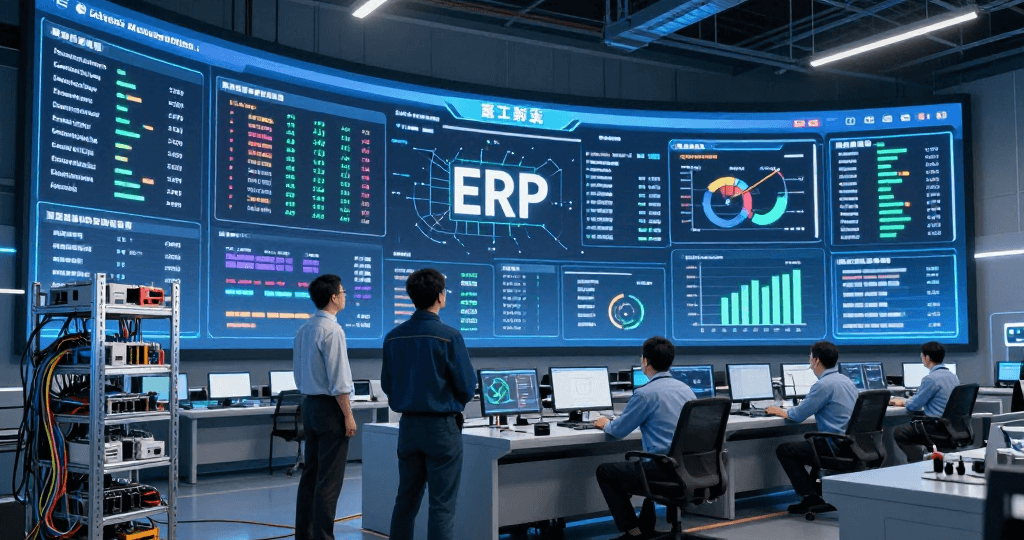
When initially planning for an Industrial Internet of Things (IIoT) system, many companies are easily influenced by market claims of "complete solutions" and "smart factories built in one step," mistakenly believing that if the system doesn't initially cover all functions, it will inevitably need to be rebuilt from scratch. On the other hand, management generally worries that phased implementation will lead to redundant investment or incompatibility between different systems. This concern doesn't fundamentally stem from technology, but rather from a lack of clear understanding of system architecture and integration methods.
In reality, the difficulty in building an IIoT system lies not in the number of functions, but in whether there is a predictable and scalable overall architecture. As long as the underlying planning is clear, phased implementation will not only not increase costs, but can effectively reduce risks.
Phased implementation does not mean a lack of overall planning, but rather planning a complete architecture first, and then implementing functions according to actual operational priorities. The greatest value of phased implementation is that it allows companies to verify the direction with minimal risk before gradually expanding the system scope. Many successful IIoT solutions begin with basic data collection and visualization, and only after internal familiarity with system operation are analytics, early warning systems, and cross-system integration implemented.
The core objective of this phase is "visibility." Through device connectivity and basic data collection, enterprises can instantly grasp the status of critical equipment, reducing reliance on manual inspections and post-event reporting.
Once the basic data is stable, enterprises begin to focus on cross-system integration. At this point, the Industrial Internet of Things (IIoT) is no longer a single platform but is integrated with ERP, maintenance systems, energy management, or other operational systems to form a true integrated IoT development platform, supporting cross-departmental decision-making.
Only after data quality and system stability are established can enterprises gradually introduce advanced analytics, predictive maintenance, or management decision support modules to assist management in identifying anomalies, optimizing scheduling, or reducing downtime risks, ensuring that the enterprise's IIoT solution truly supports long-term operations.
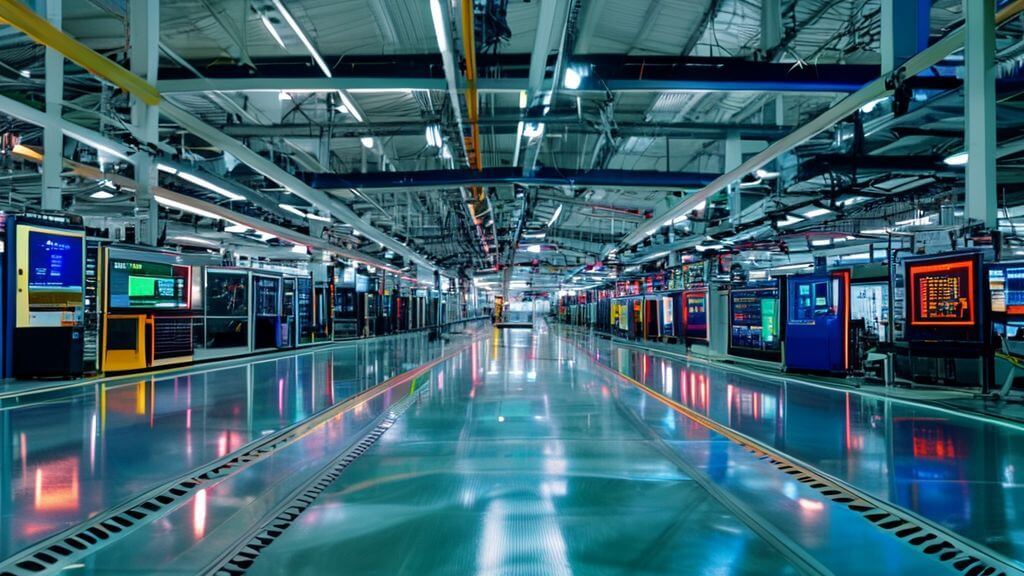
Not all enterprises are suitable for immediately launching a large-scale IIoT system. If an enterprise's internal processes are not yet standardized, equipment management responsibilities are unclear, or there is a lack of a clear project manager, prematurely introducing a complex system often only amplifies existing problems. Before evaluating whether to implement or expand an Industrial Internet of Things (IIoT) system, companies are advised to self-examine the following three questions:
1. Do you still primarily rely on manual methods to monitor equipment operation?
2. Do you already have some data, but it cannot be integrated in a timely manner or used across departments?
3. Have you ever delayed or abandoned your digitalization plans due to system limitations?
If two or more of the above situations apply, it usually indicates that the company is better suited to an integrated architecture-based, phased implementation of an IIoT system, rather than directly purchasing a complex off-the-shelf system. This assessment approach helps companies reduce the risk of rework and resource waste before investment.
How does GTS assist companies in steadily advancing the construction of IIoT systems? At the project execution level, GTS does not rush to push for feature stacking, but first clarifies with the company which capabilities are "definitely needed now" and which can be gradually implemented as business matures, adopting a modular and pluggable system design. Establishing the core architecture first, and then gradually expanding functional modules according to actual needs, allows the IoT platform to flexibly adjust with business development, avoiding subsequent system rebuilds due to initial design limitations.
This type of industrial IoT solution, centered on long-term operation, is particularly suitable for companies that want to steadily advance digitalization rather than pursuing short-term demonstration effects.
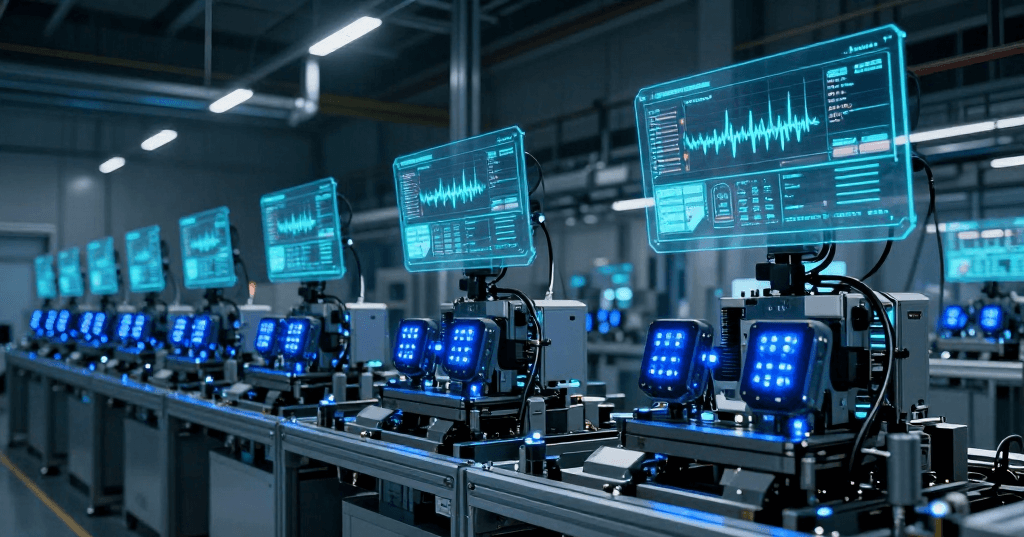
The success of industrial IoT never depends on how complete it is at the beginning, but on whether the system can continuously evolve as the company grows.
For most companies, "one-time planning, phased implementation" is not only more pragmatic but also more in line with actual operational rhythms. A clear overall plan, a robust integration architecture, and suitable industrial IoT solution partners are essential for companies to gradually build a truly valuable intelligent IoT foundation within controllable costs, laying a long-term foundation for future digital operations and intelligent decision-making. Instead of agonizing over "whether to achieve everything at once," it's better to first clarify: what stage is the most reasonable starting point for the company at this stage?
This article, "Does the construction of an industrial IoT system need to be done in one go?" was compiled and published by GTS Enterprise Systems and Software Development Service Provider. For reprint permission, please indicate the source and link: https://www.globaltechlimited.com/news/post-id-9/