GTS News Center & Latest Updates
Your Most Professional Enterprise Systems and Software Custom Development Provider!



GTS News Center & Latest Updates
Amid the wave of smart manufacturing and infrastructure upgrades, the Industrial IoT Solution is no longer merely a technology option, but a fundamental pillar for enterprises to maintain competitiveness and enhance operational efficiency. For equipment manufacturers, energy operators, and environmental and water utility enterprises, the real challenge is not whether to adopt IIoT, but how to establish a comprehensive architecture that balances scalability, security, and return on investment.
When evaluating an Industrial IoT Solution, many enterprises face issues such as fragmented systems, difficulties integrating legacy equipment, and severe data silos. Without comprehensive planning, implementation often remains at the “device connectivity” level and fails to translate into measurable business outcomes. Therefore, architecture design and a value-oriented mindset are the keys to successful deployment.
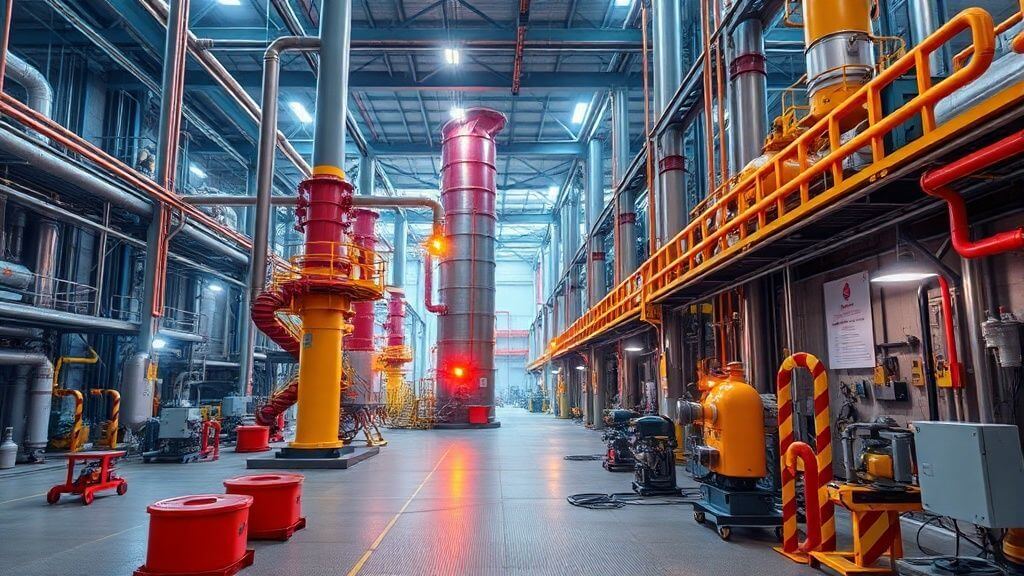
Executive decision-makers typically focus on three key questions:
First, can it improve equipment utilization and reduce downtime risks?
Second, does it contribute to energy optimization and ESG compliance?
Third, is the return on investment timeline clear and controllable?
A mature Industrial IoT Solution should simultaneously encompass device connectivity solutions, real-time monitoring and control systems, and energy management platforms. Through a sustainably scalable architecture, it should support future business growth rather than serve as a one-time project deployment.
In high-frequency operational environments, latency often equates to risk. Implementing an edge computing architecture together with Edge AI enables real-time local processing of equipment data, reduces cloud dependency, and enhances the stability of industrial automation control.
For example, in energy equipment scenarios, Edge AI can instantly analyze abnormal vibration and temperature data to enable predictive maintenance systems, preventing major failure-related downtime. Compared to traditional reactive maintenance models, such AI-driven fault diagnosis technologies significantly reduce maintenance costs and human-related risks.
If Edge AI addresses “real-time response,” then a Digital Twin Platform strengthens “visualization and predictive capability.” By building virtual models of equipment and systems, enterprises can conduct simulation testing, lifespan prediction, and performance optimization.
In water utilities and environmental sectors, digital twins help operators monitor pipeline pressure and flow variations, identify potential risks in advance, and improve remote operations efficiency. This integration of asset lifecycle management and data analytics is gradually becoming a standard configuration for smart infrastructure.
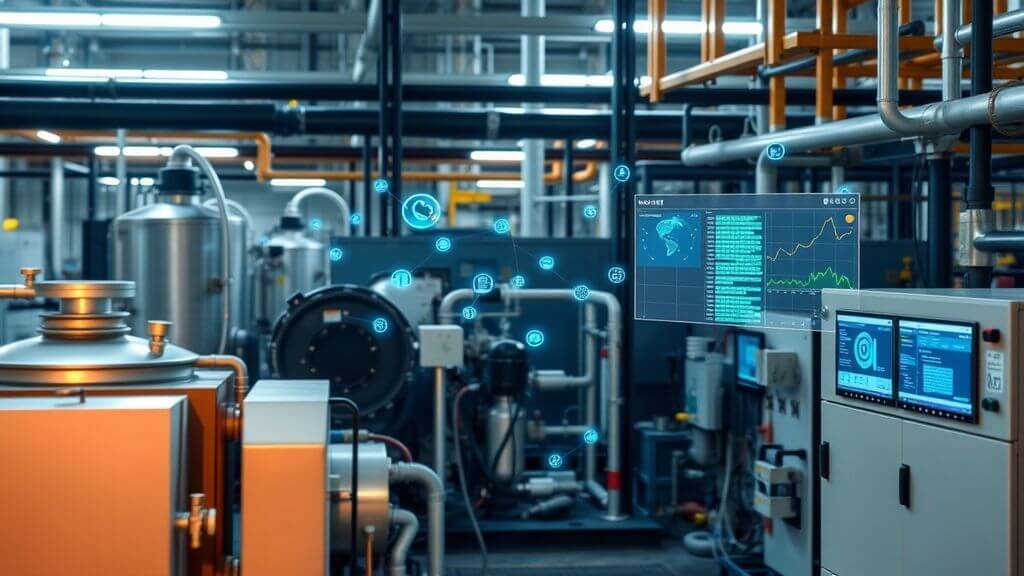
An IIoT platform with long-term value should adopt a layered design, including:
Device access layer (supporting multi-protocol integration)
Data processing and analytics layer
Application and visualization layer
API capabilities and third-party system integration
Such scalable IoT system architectures support distributed deployment and allow flexible expansion according to enterprise scale, avoiding repetitive investment in the future. For further clarification on the differences and positioning between IIoT and general IoT, you may refer to “Digital Industrial IoT Solutions: How Are They Different from Traditional IoT?”, helping enterprises define their technology selection strategy at a strategic level.
Any Industrial IoT Solution that cannot clearly align with ROI will struggle to gain executive approval. In practice, its business value is primarily reflected in:
Through real-time monitoring platforms and OEE analysis, enterprises can accurately track equipment performance and shorten troubleshooting time.
By combining predictive analytics with maintenance scheduling optimization, enterprises reduce unexpected downtime and spare parts waste.
Through energy monitoring systems and carbon emission data tracking, enterprises can meet increasingly stringent ESG and carbon management requirements.
These outcomes ultimately translate into measurable operational cost reductions and enhanced brand trust.
In today’s intensifying digital and intelligent competition, enterprises that remain reliant on fragmented monitoring and traditional maintenance models will gradually lose market advantage. A comprehensive Industrial IoT Solution not only integrates Edge AI, digital twins, and energy management capabilities, but also relates to overall operational strategy and long-term development planning. When evaluating vendors, enterprises should consider:
Whether customized IIoT system development is supported
Whether cross-system integration capabilities are available
Whether enterprise-grade cybersecurity and distributed deployment requirements are met
Whether long-term technical support and upgrade planning can be provided
As an enterprise-level development service provider serving the Hong Kong market, GTS has been deeply engaged in Industrial IoT Solution development and system integration for many years. We assist equipment manufacturers and energy enterprises in building integrated smart platforms covering architecture planning, platform development, and data application—ensuring that technology investments truly translate into business results. How should enterprises formulate a practical and implementable IIoT architecture? Contact us today. GTS will provide tailored architectural recommendations and development planning based on your industry characteristics and operational objectives, helping you steadily advance your intelligent upgrade journey.
This article, "Industrial IoT Solution Architecture: Edge AI, Digital Twins and Business Value for Smart Enterprises" was compiled and published by GTS Enterprise Systems and Software Development Service Provider. For reprint permission, please indicate the source and link: https://www.globaltechlimited.com/news/post-id-41/