GTS News Center & Latest Updates
Your Most Professional Enterprise Systems and Software Custom Development Provider!



GTS News Center & Latest Updates
In Hong Kong, more and more business executives are raising AI agent development in procurement discussions — yet decision-makers who truly understand how it differs from chatbots and RPA remain in the minority. This gap in understanding often leads enterprises to either underestimate the actual capabilities of AI Agents, or to discover after project initiation that their existing infrastructure cannot support deployment.
An AI Agent is not a smarter question-and-answer tool. It is a business automation execution layer capable of autonomously planning, calling tools, and executing multi-step tasks. Its value lies not in "conversation" but in "getting work done" — processing complex business workflows across systems without requiring step-by-step human intervention, forming a complete closed loop from receiving instructions to delivering output.
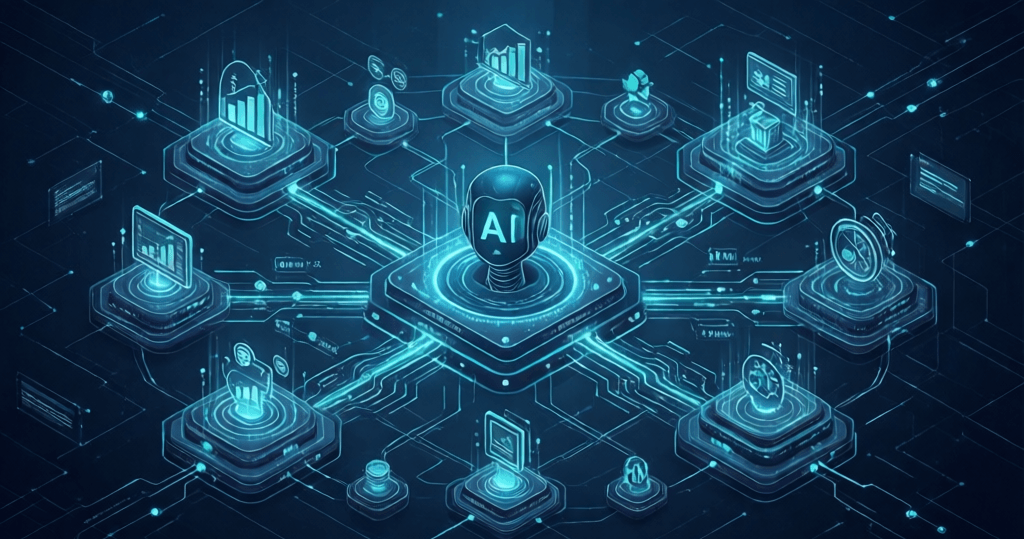
For many enterprises, the first obstacle when evaluating AI Agents is conceptual confusion. RPA (Robotic Process Automation) executes pre-defined fixed operation paths — the moment it encounters a page change or process exception, the system breaks down. Traditional chatbots can only respond within pre-set conversation trees and cannot actively execute back-end operations.
The fundamental difference with AI Agents lies in autonomy and adaptability. An AI Agent can independently break down steps according to task objectives, assess the current state, choose which tools to call, and dynamically adjust its execution path when exceptions arise — rather than relying on humans to reset the rules. For enterprise scenarios with high process complexity and frequently changing business rules, this difference in capability produces an efficiency gap of an entirely different magnitude.
It is worth noting that AI Agents are not suited to every automation scenario. For operations with highly fixed rules and rarely changing processes, RPA is lower cost and simpler to maintain. Accurately defining the use case before entering project initiation is the first step in avoiding resource misallocation.
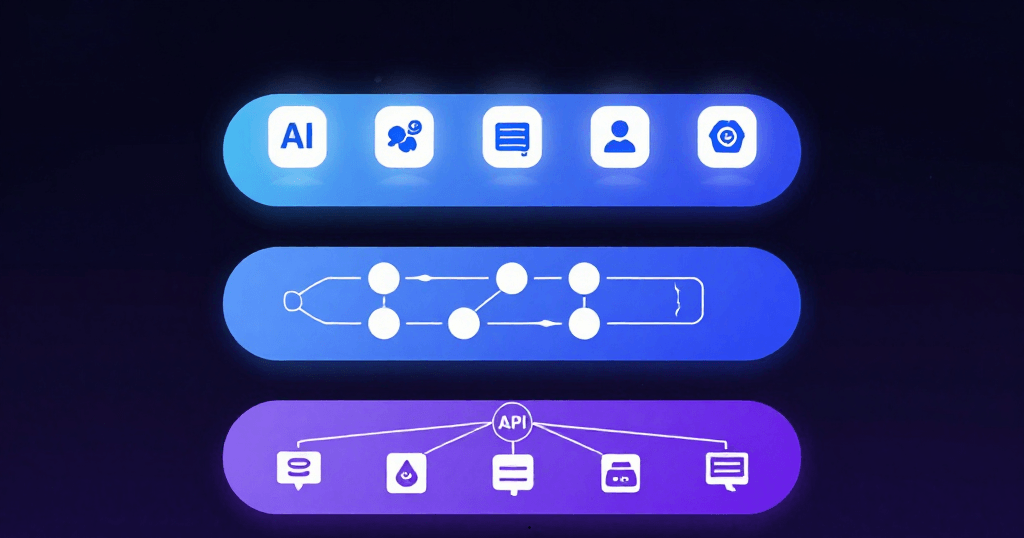
From an engineering perspective, the technical architecture for enterprise-grade AI agent development is divided into three layers. Without any one of them, an Agent cannot operate reliably in a production environment.
The model layer determines the upper limit of an Agent's reasoning capability. Different tasks place different demands on models — complex multi-step reasoning and document analysis suit GPT-5; cost-sensitive, high-concurrency structured processing scenarios are better served by DeepSeek-V3; workflows involving image generation or multimodal input require the integration of Stable Diffusion. Relying on a single model to cover all scenarios both wastes cost and underperforms on specific tasks. A multi-model hybrid architecture is the practical choice for enterprise deployment.
The workflow engine layer is the true dividing line between "being able to do AI" and "being able to deliver enterprise AI." It is responsible for task decomposition logic, step sequencing, tool-calling mechanisms, exception branch handling, and the design of human intervention nodes — meaning the conditions under which an Agent should pause and await human confirmation rather than continue executing autonomously. Vendors without a mature workflow engine typically deliver a system that runs smoothly in a demo environment but proves fragile in production.
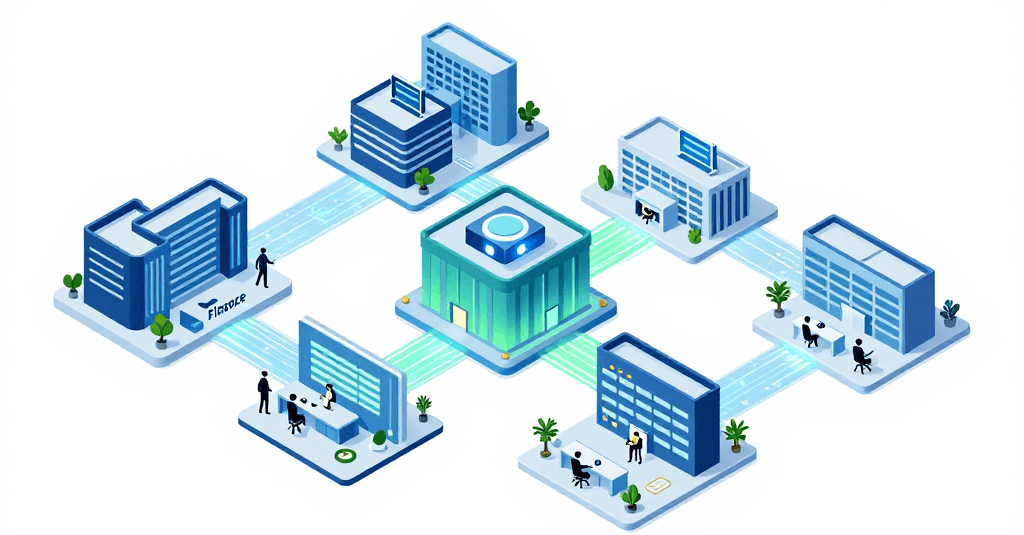
The system connectivity layer determines whether an Agent can truly integrate into an enterprise's existing operations. An Agent must be able to read and write ERP data, update CRM records, query financial systems, and trigger approval workflows via API. The depth of integration at this layer directly determines the actual business value an Agent creates for the enterprise.
No matter how clear the concept, concrete scenarios are always more compelling. The following five areas represent the AI Agent application types with the strongest procurement intent among Hong Kong enterprises in 2025 to 2026:
1.Financial compliance review automation: An Agent automatically reads the latest regulatory documents, cross-references internal institutional policies, flags discrepancies, and generates structured reports — replacing manual page-by-page review and directly addressing the compliance pressures faced by SFC- and HKMA-regulated institutions.
2.Procurement approval workflows: Automatically verifies whether procurement requests comply with budget rules and supplier qualifications, routes requests according to approval tiers, and maintains a full auditable record throughout.
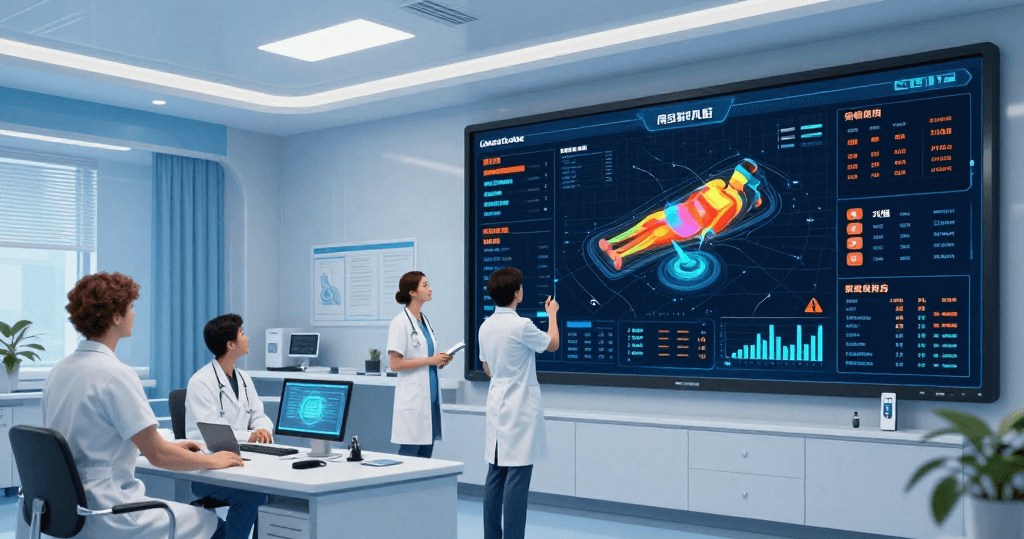
3.Healthcare resource scheduling optimisation: Under multiple constraint conditions — staff qualifications, patient priority, equipment availability — an Agent generates optimal scheduling plans in real time and automatically updates them as conditions change.
4.Customer service triage and handling: Automatically determines query type, directly handles standard requests, routes complex or high-risk cases to human agents, and simultaneously updates CRM records to reduce repetitive manual operations.
5.Cross-system data consistency maintenance: When ERP, CRM, and financial systems hold inconsistent data for the same client, an Agent automatically identifies discrepancies, triggers a verification process, and records the outcome — replacing manual periodic reconciliation.
In practice, the complexity of integrating existing systems often consumes more engineering resources than developing the Agent itself.
An API-first approach is the most robust integration strategy. Leading ERP systems such as SAP and Oracle both provide standard API interfaces, making most integrations technically feasible. The real challenge lies in the completeness of interface documentation and version stability. During the integration planning phase, a detailed feasibility assessment of each target system's API capability is required — rather than assuming that "having an API means it can connect."
For legacy systems without modern APIs, connectivity can be addressed through direct database connections, RPA bridge layers, or middleware adapters. However, these solutions carry higher maintenance costs and must be factored into long-term architectural decisions.
Additionally, any enterprise Agent deployment must incorporate adequate sandbox testing environments and rollback mechanisms. When an Agent encounters an anomaly in production, the system should automatically degrade to human-handled processing mode rather than allowing erroneous operations to propagate through core business systems.
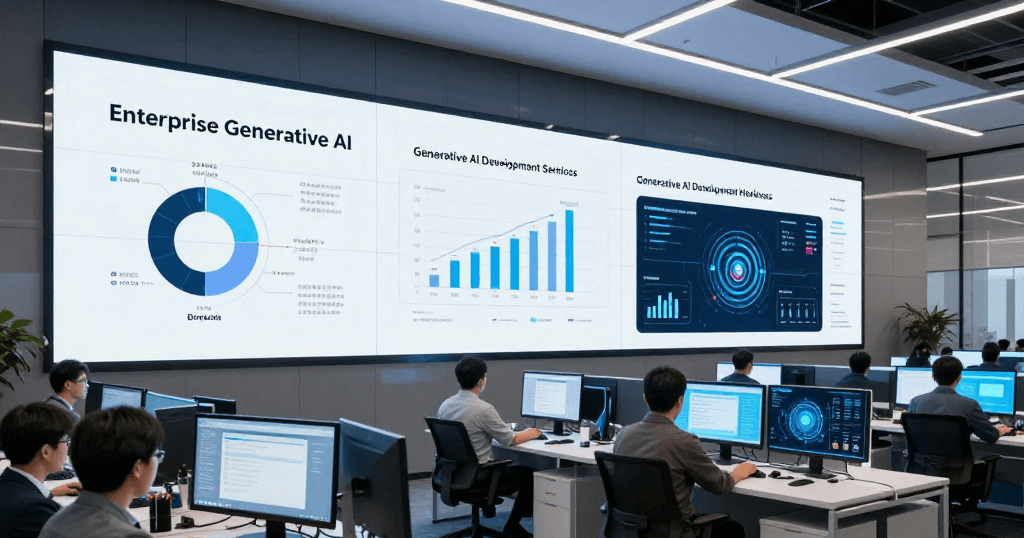
If your team is still evaluating the technical direction — from "whether to introduce AI workflow automation" to "how to choose the right custom development approach" — [Enterprise Generative AI Solutions: From General-Purpose Tools to Deeply Customized Workflows] maps out the applicable boundaries between custom workflows and general-purpose tools from a business requirements perspective, and can serve as a reference framework before formulating your AI deployment strategy.
Q: How long does AI Agent deployment take? For a well-scoped single-scenario Agent, the time from requirements confirmation to production deployment is typically four to eight weeks. For multi-agent collaborative systems or projects involving complex legacy system integration, a phased delivery approach is recommended — completing the MVP for the core scenario first, then progressively expanding the collaborative scope, to reduce overall project risk.
Q: Can an AI Agent be deployed entirely on a company's private servers without connecting to the public cloud? Yes. For institutions regulated by SFC, HKMA, or PDPO where data cannot leave the jurisdiction, private on-premise deployment is the standard approach. Mainstream models including GPT-5 and DeepSeek-V3 both support private deployment, but this requires a development vendor with the appropriate infrastructure configuration experience to execute correctly.
Q: How do you prevent an AI Agent from performing erroneous operations in a production environment? The core mechanisms operate on three levels: setting human review nodes during workflow design, with mandatory human confirmation required for high-risk operations such as financial transfers or contract generation; designing operation logs and rollback capability at the system architecture level; and simulating various exception scenarios during testing to ensure the Agent correctly degrades rather than erroneously executes under boundary conditions.
Q: How do AI Agents perform in Hong Kong enterprises' mixed English and Traditional Chinese environments? Modern LLMs have reached a high level of support for Traditional Chinese. However, for scenarios involving Hong Kong-specific regulatory terminology, industry abbreviations, or written Cantonese conventions, targeted optimisation at the prompt engineering and model fine-tuning level is still required, rather than relying on the default behaviour of a general-purpose model.
GTS provides enterprise-grade AI agent development and custom development services for large enterprises in Hong Kong and the Greater Bay Area. By integrating GPT-5, DeepSeek-V3, Stable Diffusion, and other leading models — combined with a proprietary Agent and workflow engine — GTS covers full-cycle deployment requirements for regulated industries including financial services, healthcare, and industrial IoT. All projects support private on-premise deployment, source code is transferred in full to the client, and GTS has direct delivery experience under Hong Kong's SFC, HKMA, and PDPO compliance frameworks. To learn how an enterprise workflow automation solution can be deployed in your specific business scenario, contact a GTS technical consultant to arrange an initial discussion.
If you already have a clear business pain point but are uncertain whether an AI Agent is the most appropriate solution — feel free to describe the scenario directly to us. GTS provides a no-pressure initial feasibility assessment to help you clarify the technical boundaries and realistic engineering scope expectations before project initiation.
This article, "Enterprise AI Agent Development: How Custom AI Agents Integrate with Your Existing Systems" was compiled and published by GTS Enterprise Systems and Software Development Service Provider. For reprint permission, please indicate the source and link: https://www.globaltechlimited.com/news/post-id-51/