GTS News Center & Latest Updates
Your Most Professional Enterprise Systems and Software Custom Development Provider!



GTS News Center & Latest Updates
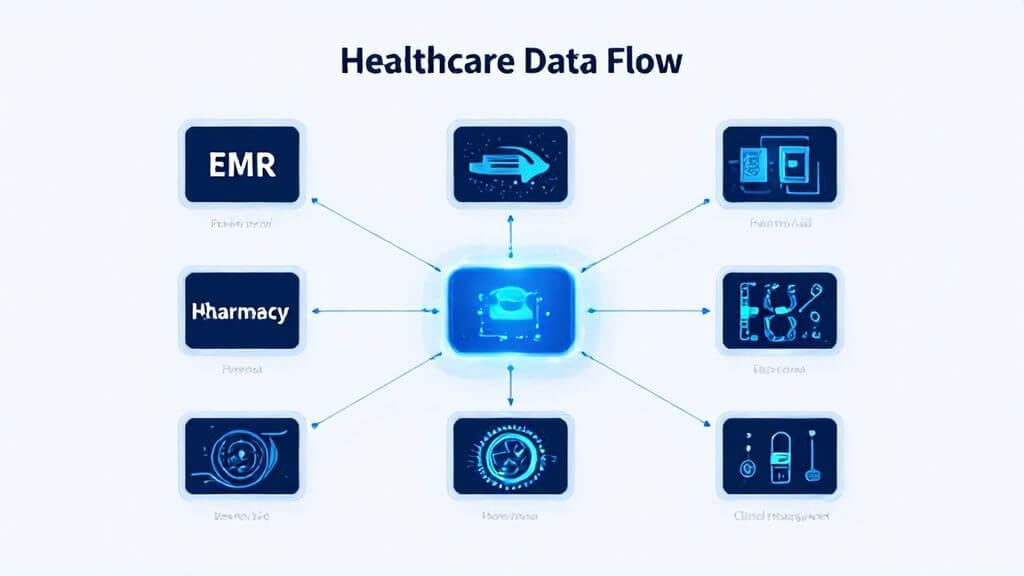
Against the backdrop of continuous expansion in the private healthcare market, multi-site operations, and increasing specialization, Hong Kong medical institutions are facing higher levels of data governance and compliance pressure. As outpatient, inpatient, surgical, laboratory, and radiology workflows become fully digitalized, a lack of holistic system planning can directly impact operational efficiency and regulatory risk exposure. For decision-makers, what truly deserves investment is not merely software procurement, but sustainable Healthcare Management System Development capabilities and architectural design expertise. In this article, GTS systematically analyzes how to build a healthcare IT architecture that meets HA interoperability standards and supports long-term scalability from five perspectives: compliance risk, platform infrastructure, intelligent upgrades, deployment standards, and partnership models. Many institutions prioritize feature completeness and pricing when introducing medical systems, while overlooking local regulatory requirements and data accountability. When systems fail to fully consider the Personal Data (Privacy) Ordinance (PDPO), audit trails, layered access control, and data encryption mechanisms, compliance vulnerabilities may emerge—even if the system is functionally comprehensive. According to the Data Protection Principles under Hong Kong’s Personal Data (Privacy) Ordinance (Cap.486), healthcare institutions must take practicable steps to safeguard personal data: DPP3 (Use Limitation): Patient data may only be used for the purpose specified at the time of collection DPP4 (Data Security): Data users must take practicable measures to ensure data security DPP6 (Access and Correction): Data subjects have the right to access and correct their personal data If a system focuses solely on functional modules (scheduling, reporting, AI analytics) without embedding the above compliance mechanisms, it may face substantial legal and audit risks. Common causes of failure include: Failure to establish a clear data access control model Lack of complete evidence archiving and operation log retention mechanisms HA interoperability interfaces not designed according to standards Insufficient overall security hardening after system expansion These issues do not stem from technological incapability, but from the absence of a comprehensive Hong Kong healthcare IT compliance architecture mindset. Without a compliance-centric architectural blueprint, the more complex the system becomes, the higher the risk. As regulatory oversight on data responsibility and information security in Hong Kong intensifies, compliance-driven system design is no longer optional—it is a foundational infrastructure requirement. True strategic value lies not in isolated modules, but in an integrated medical information management platform that supports cross-departmental operations. It should consolidate outpatient appointment scheduling, Electronic Medical Records (EMR), inpatient management, surgical scheduling, pharmacy inventory, LIS/PACS imaging systems, and CRM patient relationship management modules—operating under a unified data architecture. In other words, the platform functions more like digital infrastructure rather than a collection of applications. Its architecture must consider: A unified data model and Master Patient Index API interoperability standards and system integration capability High Availability (HA) and Disaster Recovery (DR) Layered permissions and Zero-Trust security design For a deeper understanding of the practical implementation process—from requirement analysis to official system launch—refer to our previous article: “Hospital Information Management System Custom Development Process: From Requirements Gathering to Go-Live” which helps establish a complete adoption framework. With the rapid advancement of AI and data analytics technologies, numerous products now claim intelligent scheduling, risk prediction, and automated diagnosis capabilities. However, if Smart Healthcare Solutions are not built upon a solid compliance foundation, the risks may far outweigh the benefits. A truly mature intelligent upgrade should include: Pre-deployment compliance assessment mechanisms Security hardening measures, including data encryption, multi-factor authentication, and operation tracking Evidence archiving to ensure all system activities are auditable Only by introducing AI analytics and operational dashboards within a compliance framework can intelligent features provide reliable decision support for management, rather than increasing regulatory burdens. For large medical institutions, system downtime affects not only service continuity but also clinical safety. Under the eHealth Record Sharing System (eHRSS) framework, data access must be traceable, authorized, and auditable. This implies that healthcare IT systems must natively incorporate audit trails and permission mapping mechanisms. When building an HA-interoperable architecture, the following four core elements must be addressed: 1.Active-active or active-standby redundancy with real-time data synchronization 2.Disaster recovery drills and cross-region backup mechanisms 3.HA-compliant interface standards and data exchange protocols 4.Data protection declarations aligned with ISO 27701 These requirements form the practical compliance benchmark for Hong Kong healthcare IT architecture and serve as key indicators of vendor professionalism. Healthcare systems typically have a lifecycle exceeding ten years, during which they will undergo policy changes, specialty expansion, and technological upgrades. If only off-the-shelf software is procured, future expansion or integration may be constrained by original design limitations. Therefore, decision-makers should assess whether a provider possesses sustainable Healthcare Management System Development capabilities and can deliver integrated services covering architecture design, module customization, system integration, and HA interoperability testing. Taking GTS as an example, we provide Enterprise-Grade Medical Information Management System Custom Development for large medical institutions, covering outpatient, inpatient, surgical, laboratory, radiology, and CRM workflows. Our service model integrates “Compliance Pre-Check — Security Hardening — Evidence Archiving” as a bundled framework. During project acceptance, we also provide HA interoperability readiness assessment reports and ISO 27701 alignment documentation to ensure both technical and regulatory compliance. In an environment of tightening regulation and heightened data governance requirements, the core of Healthcare Management System Development lies not in feature stacking, but in establishing an extensible, auditable, and interoperable infrastructure. When medical information management platforms and smart healthcare solutions are built upon a comprehensive Hong Kong healthcare IT compliance architecture, institutions can truly balance efficiency, risk control, and long-term competitiveness. If your institution is planning a next-generation system architecture or evaluating HA interoperability readiness, we recommend conducting a comprehensive compliance and architectural assessment first. You are welcome to schedule a dedicated technical review session via our contact form. Based on your institutional scale and specialty structure, we will provide specific architectural optimization recommendations and risk analysis reports to help you achieve the optimal balance between security and efficiency and steadily advance your next phase of digital healthcare transformation.
1、Why Do Most Healthcare Management Systems Fail in Compliance in Hong Kong?

2、From Software to Infrastructure: Redefining the Medical Information Management Platform
3、Smart Healthcare Solutions Must Prioritize Compliance Over Features
4、Four Key Requirements for High-Availability Deployment
5、Choose a Long-Term Development Partner, Not Just a Software Vendor
Conclusion: Building Sustainable Healthcare Management Capabilities Through Architectural Thinking