GTS News Center & Latest Updates
Your Most Professional Enterprise Systems and Software Custom Development Provider!



GTS News Center & Latest Updates
Against the backdrop of highly electronic global capital markets and increasingly stringent regulatory frameworks, building automated trading systems is no longer merely a technical upgrade for improving efficiency. It has become a core strategic initiative affecting competitiveness, risk control capabilities, and long-term operational costs. Whether brokerage firms are expanding their Hong Kong and U.S. equity businesses, asset managers are deploying quantitative strategies, or fintech companies are developing next-generation trading platforms, automation and systemization have become irreversible trends. This article examines the key factors enterprises must carefully evaluate when deploying automated trading infrastructure in Hong Kong, covering market environment, core architecture, forex robot integration, AI-driven risk control, regulatory compliance, and deployment practices. Hong Kong’s market operates with Hong Kong Exchanges and Clearing (HKEX) as its core trading infrastructure, under the regulatory framework of the Securities and Futures Commission (SFC) and the Hong Kong Monetary Authority (HKMA). This structure forms one of the world’s major electronic trading hubs while supporting mature markets in securities, futures, and derivatives, and connecting capital flows between mainland China and the global financial system. As cross-market trading demand increases and high-frequency trading strategies become more widespread, manual operations can no longer meet the requirements for low-latency matching and real-time risk control. Institutions commonly face three major challenges: 1.Complex integration across multiple markets and asset classes 2.Insufficient system stability under rapidly increasing trading volumes 3.Growing pressure from regulatory reporting and audit traceability In this context, the core value of building automated trading systems lies in establishing scalable technological infrastructure capable of real-time market data processing, intelligent Order Routing Systems, and closed-loop risk control, thereby reducing human error and operational latency. An automated trading platform built to institutional standards typically adopts a layered and distributed architecture. Core components generally include: Market Data Engine High-Performance Matching Engine Order Management System (OMS) Clearing and Settlement Modules Account and Fund Management Systems Real-Time Risk Control Modules From a technical perspective, low-latency matching, high-concurrency processing, and robust fault-tolerance mechanisms are essential. Distributed microservices architecture helps eliminate single points of failure, while event-driven architecture ensures synchronized operations between trading and risk control. For organizations seeking a deeper understanding of integrated trading and operational frameworks, you may also refer to our previous article “Fintech Trading System Development Explained: A Practical Guide for Enterprises” which provides a comprehensive overview of enterprise-grade trading platform architecture and fintech system integration. For institutions involved in foreign exchange or cross-border trading, integrating automated forex trading robots is often a critical component of automated strategy execution. However, a single strategy robot alone cannot form a complete trading system; its stability and risk control depend heavily on the integration capability of the overall architecture. Within enterprise environments, robots should connect seamlessly with market data sources, liquidity provider interfaces, risk engines, order matching systems, and backtesting and monitoring modules. Through strategy version management and sandbox testing mechanisms, enterprises can ensure that strategy upgrades do not disrupt the stability of live trading. As market volatility increases, traditional rule-based risk control models are gradually losing effectiveness. Artificial intelligence and machine learning technologies are becoming essential pillars of next-generation trading systems. Through AI models, institutions can achieve: Real-time risk scoring and abnormal trade detection Liquidity analysis and slippage prediction Adaptive position adjustment and strategy optimization For example, during high-volatility events, systems can automatically adjust margin requirements or suspend high-risk strategies to prevent cascading losses. This data-driven risk management model not only improves trading stability but also strengthens institutional clients’ trust in the platform. When designing enterprise trading infrastructure, technical capabilities must align closely with Hong Kong’s regulatory framework. According to the SFC’s “Guidelines for the Regulation of Automated Trading Services,” institutions providing or using automated trading services must establish appropriate risk management and internal control mechanisms, including but not limited to: Effective risk control mechanisms Pre- and post-trade monitoring procedures System testing and change management policies The guidelines also emphasize that trading systems must have sufficient capacity and stress-testing arrangements to prevent market disorder or systemic failures from spreading risk. Additionally, the Securities and Futures Ordinance (Cap. 571) and the SFC Code of Conduct for Licensed Persons impose principle-based requirements on internal controls, record retention, and electronic trading arrangements, highlighting the importance of risk management and audit traceability. When technical design clearly aligns with these regulatory frameworks, platform operators can maintain a stable balance between business expansion and regulatory compliance. If your organization is evaluating whether to upgrade existing infrastructure or build a platform from scratch, it is advisable to begin with business models and regulatory positioning and conduct a comprehensive assessment of both technical and compliance requirements. Engaging experienced technology teams (such as GTS and other fintech system development specialists) early in the process can often help organizations avoid major architectural mistakes. At the banking and settlement level, the HKMA Supervisory Policy Manual also establishes principle-based standards for risk management frameworks and operational continuity. Although specific provisions vary by business scope, the overarching regulatory direction emphasizes real-time risk monitoring, abnormal trade detection and response mechanisms, and strong system resilience. Therefore, in a comprehensive financial system solutions architecture, automated trading systems must not only deliver high-performance matching and low-latency capabilities but also embed the following elements at the architectural level: KYC and AML modules、Trade monitoring and audit traceability systems、System stress-testing and version management processes、Full trade log retention mechanisms. (Note: The regulatory documents referenced above are publicly available. Enterprises should conduct professional legal assessments based on their specific licensing category and business scope.) As market competition and regulatory environments continue to evolve, only partners with forward-looking planning and deep technical expertise can support enterprises in sustainable growth. In deployment strategy, organizations typically weigh on-premise infrastructure against cloud-based SaaS models. The former emphasizes data sovereignty and deep customization, while the latter offers faster implementation and lower initial costs.When selecting a technology partner, key evaluation criteria include: Experience with multi-market live trading environments Familiarity with Hong Kong, U.S., and derivatives trading rules Long-term maintenance and version upgrade capabilities Cross-module system integration expertise GTS, a Hong Kong-focused enterprise system development provider, has extensive experience in fintech infrastructure development. It offers one-stop customized services covering market data processing, trading matching, clearing and settlement, fund management, CRM systems, and partner/agency management platforms. Through modular architecture and scalable system design, GTS helps enterprises build sustainable trading infrastructure while maintaining cost efficiency. Core modules typically include a market data engine, Order Management System (OMS), Matching Engine, clearing and settlement systems, and risk management modules. For institutions operating across multiple asset classes, integration with liquidity sources, Order Routing Systems, and regulatory compliance monitoring mechanisms is also required. In enterprise-level trading environments, automated forex trading robots generally need to integrate with market data feeds, risk control engines, and order management systems to ensure stable strategy execution and controlled risk exposure. Institutions must comply with SFC regulations governing electronic trading and automated trading services, as well as HKMA guidelines on risk management and operational continuity. Systems should include real-time risk monitoring, trade record retention, and stress-testing capabilities. Within Hong Kong’s highly competitive and compliance-driven financial ecosystem, building automated trading systems is not merely a technological upgrade—it is a critical pillar of digital transformation for financial institutions.From core architecture and intelligent risk control to operational integration and deployment strategies, every component directly affects platform stability and long-term returns. For enterprises aiming to establish competitive trading capabilities across Hong Kong equities, U.S. markets, and multi-asset environments, careful planning and collaboration with experienced enterprise-level development teams will be a decisive step toward reducing risk and maximizing performance.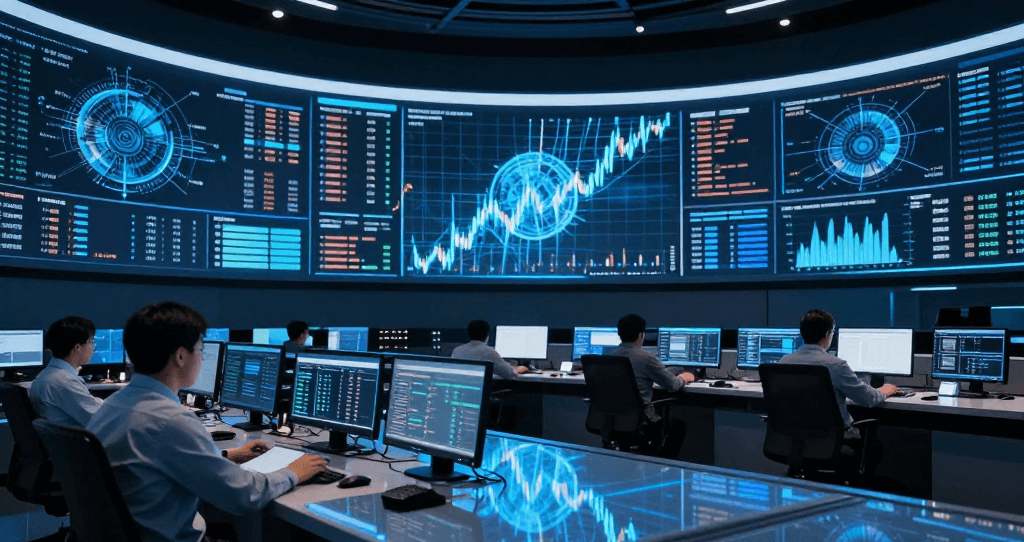
1. Why Build Automated Trading Systems in Hong Kong
2. Core Architecture of Automated Trading Systems

3. Integration of Forex Automated Trading Robots
4. AI-Driven Risk Management and Strategy Intelligence
5. Compliance and Operational Scope of Financial System Solutions

6. Deployment Best Practices and Choosing the Right Development Partner
FAQ
FAQ 1 – What core modules are required for enterprises building automated trading systems?
FAQ 2 – Can automated forex trading robots operate independently?
FAQ 3 – What regulatory considerations must financial institutions address when deploying automated trading systems in Hong Kong?
Conclusion