GTS News Center & Latest Updates
Your Most Professional Enterprise Systems and Software Custom Development Provider!



GTS News Center & Latest Updates
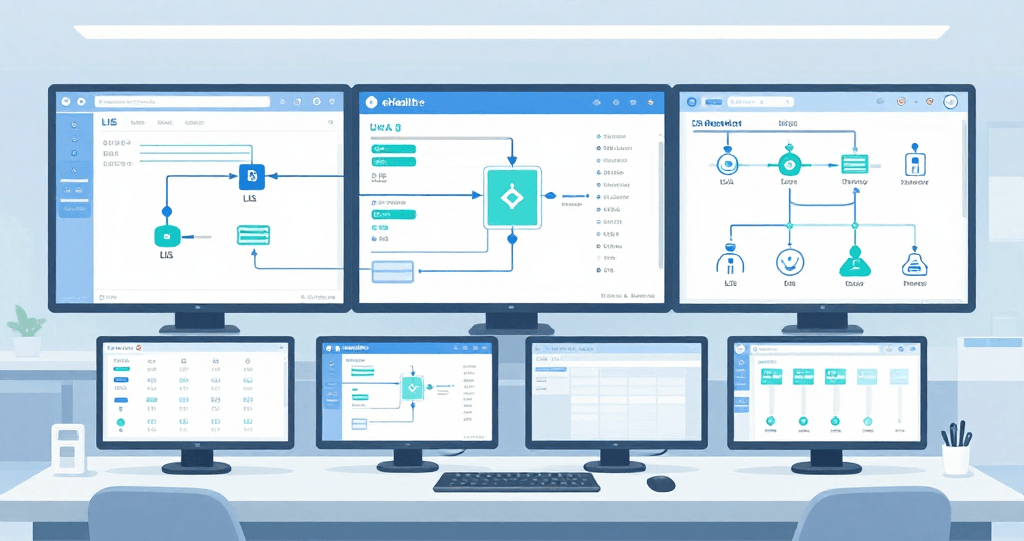
For many IT managers at Hong Kong private hospitals, system integration is a more daunting challenge than the procurement decision itself. Laboratory, radiology, and pharmacy systems operate in silos; clinical staff must switch between multiple interfaces to access information; medication order execution status cannot be synchronised in real time; and patient records appear duplicated or incomplete across systems. These issues not only affect clinical efficiency, but following the enactment of the Electronic Health Record Sharing System (Amendment) Ordinance 2025, they now directly implicate an institution's regulatory compliance obligations. This article takes a practical approach to outlining 6 key steps for Hospital Information System integration, helping Hong Kong private hospitals complete the connection of LIS, RIS, pharmacy, and electronic health records without disrupting daily operations, while meeting eHealth+ interoperability requirements. When hospitals begin a Health Information Management System integration project, they tend to frame the problem as a technical challenge. In practice, however, the most common reason projects fail is inadequate upfront preparation. There are three sources of complexity unique to Hong Kong's private healthcare environment, and understanding them is a prerequisite for moving forward successfully: Subsystems from different eras and different vendors, each with its own data structures and interface standards; eHealth+ compliance requirements that impose clear obligations around the completeness and timeliness of data submissions; Limited in-house IT capacity, which frequently causes integration projects to stall during the testing phase. Before a single line of interface code is written, a thorough inventory of the current system landscape must be completed. This includes documenting the version numbers, database types, and API documentation completeness of all existing subsystems, as well as determining whether each system's data output conforms to industry-standard protocols such as HL7 v2.x, FHIR, or DICOM, or relies on proprietary formats. The value of this inventory lies in identifying high-risk interfaces — the connection points where the greatest disparity in data standards exists and where integration problems are most likely to arise. In most cases, the LIS laboratory results return pathway and the pharmacy medication order execution pathway represent the highest-priority integration targets from a clinical safety perspective. When advancing HIMS Hospital Information Management System integration in a Hong Kong private hospital, the following six interfaces are the most critical, each with its own characteristic implementation challenges in the local context: LIS Laboratory Information System: The most common issue is inconsistency in HL7 ORU message format versions, which prevents laboratory results from being automatically returned to the main system. RIS Radiology Information System: Delays in matching HL7 ORM scheduling instructions with the RIS Worklist frequently cause radiology workflows to fall out of sync with clinical orders. PACS Picture Archiving and Communication System: When DICOM image viewing permissions are not integrated with the HIS user role framework, imaging silos form and physicians are unable to complete image review within a single interface. PIS Pharmacy Information System: The failure to synchronise medication order execution status to the main system in real time is a primary source of duplicate dispensing risk and a recurring finding in hospital accreditation reviews. EHR and eHealth+ Upload Interface: Incomplete data field mapping is the most common cause of compliance failure. The Hospital Authority's relevant guidelines explicitly require that health data submitted to eHealth+ conform to specified data element standards. Where the HIS does not fully map to these fields at the design stage, the cost of remediation is substantial. Patient CRM and Appointment System: Inconsistent Patient Master Indexes across systems cause the same patient to appear as multiple separate records, significantly undermining the continuity of medical records and the accuracy of data analytics. Data migration is the phase in which institutions can least afford errors. The recommended approach is incremental rolling migration combined with a dual-write mechanism, rather than a one-time full cutover. During the parallel operation period, data is written simultaneously to both the old and new systems; only once incremental data validation has confirmed stability should writes to the legacy system be terminated. Pre-migration data cleansing is equally essential: identifying and correcting duplicate records, missing fields, and formatting errors in historical data is far less costly than remediation after migration. Upon completion, a data reconciliation report should be produced, comparing record counts between the source and target systems to ensure completeness is auditable. In any system integration project, the commitment to uninterrupted operations must be delivered through architectural design, not left to chance. The parallel testing phase should involve at least four weeks of end-to-end simulation in an isolated sandbox environment. Test scenarios should cover peak outpatient concurrency, cross-system data synchronisation latency, and end-to-end validation of eHealth+ uploads. Emergency rollback trigger conditions must be defined in advance to ensure that, in the event of a P0-level fault, the system can be restored to its pre-cutover state within the agreed timeframe. For the formal cutover, a department-priority phased rollout strategy is recommended: begin with departments that carry lower operational volume, such as health check centres, accumulate stable performance data, and then progressively extend to higher-risk departments such as the emergency department and ICU. This approach distributes integration risk across the timeline and prevents a single point of failure from affecting the entire hospital. When planning a phased go-live strategy, the quality of upfront requirements scoping almost always determines how smoothly execution proceeds. GTS's previously published article, “Hospital Information Management System Custom Development Process: From Requirements Gathering to Go-Live”, provides a detailed breakdown of resource allocation across each phase from initial planning to formal delivery, and is recommended reading before initiating an integration project. For most integration projects, documentation stops on go-live day. In reality, the first 90 days after launch represent the most vulnerable period for integration stability. Ongoing monitoring should cover the following key indicators: interface message queue backlog, cross-system data synchronisation latency, eHealth+ upload success rate, and clinical staff system error rate. A tiered alerting mechanism should also be established to distinguish between critical faults requiring immediate human intervention and lower-priority anomalies that can be addressed during scheduled maintenance windows. In addition, a quarterly integration audit is recommended to proactively review the completeness and field accuracy of eHealth+ data submissions, identifying and resolving potential gaps before any regulatory compliance review. Hospital Information System integration is fundamentally a precisely planned systems engineering undertaking. The quality of preparation at each step directly determines the difficulty of the next. For Hong Kong private hospitals operating with limited resources, choosing a technology partner with local healthcare compliance expertise and deep familiarity with eHealth+ interface architecture delivers far greater long-term value than minimising upfront advisory costs. GTS specialises in providing Health Information Management System custom development services for healthcare institutions in Hong Kong and the Greater Bay Area, and has delivered end-to-end integration projects for leading Hong Kong private hospitals encompassing LIS, RIS, pharmacy, electronic health records, and eHealth+ interfaces. If you are currently evaluating the feasibility of system integration at your institution, we welcome you to submit your current system landscape and integration objectives via the link below. Our technical consultants will arrange an initial assessment meeting within two business days: [Submit Your System Integration Assessment Request Now].
The Root Cause of Integration Failures Is Rarely the Technology Itself
Step 1: System Inventory — Essential Groundwork Before You Begin
Step 2: Technical Standards and Common Pitfalls Across Six Core Interfaces
Step 3: Data Migration — Preserving Historical Records Is a Non-Negotiable Responsibility
Step 4–5: Parallel Testing and Phased Cutover — The Core Strategy for Risk Isolation
Step 6: Post-Launch Integration Stability Monitoring

The Key to Successful Integration Is Getting It Right From the Start